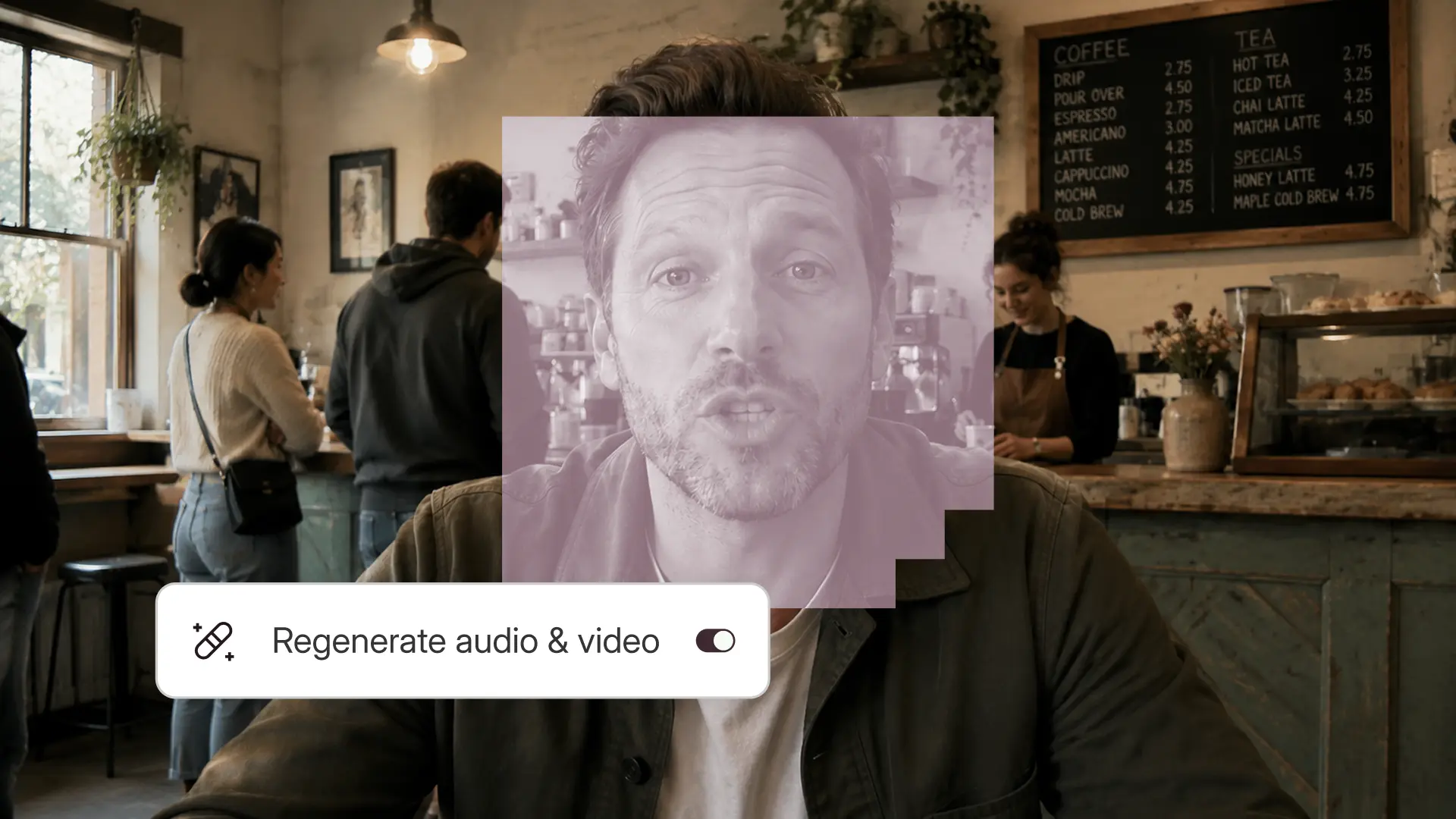
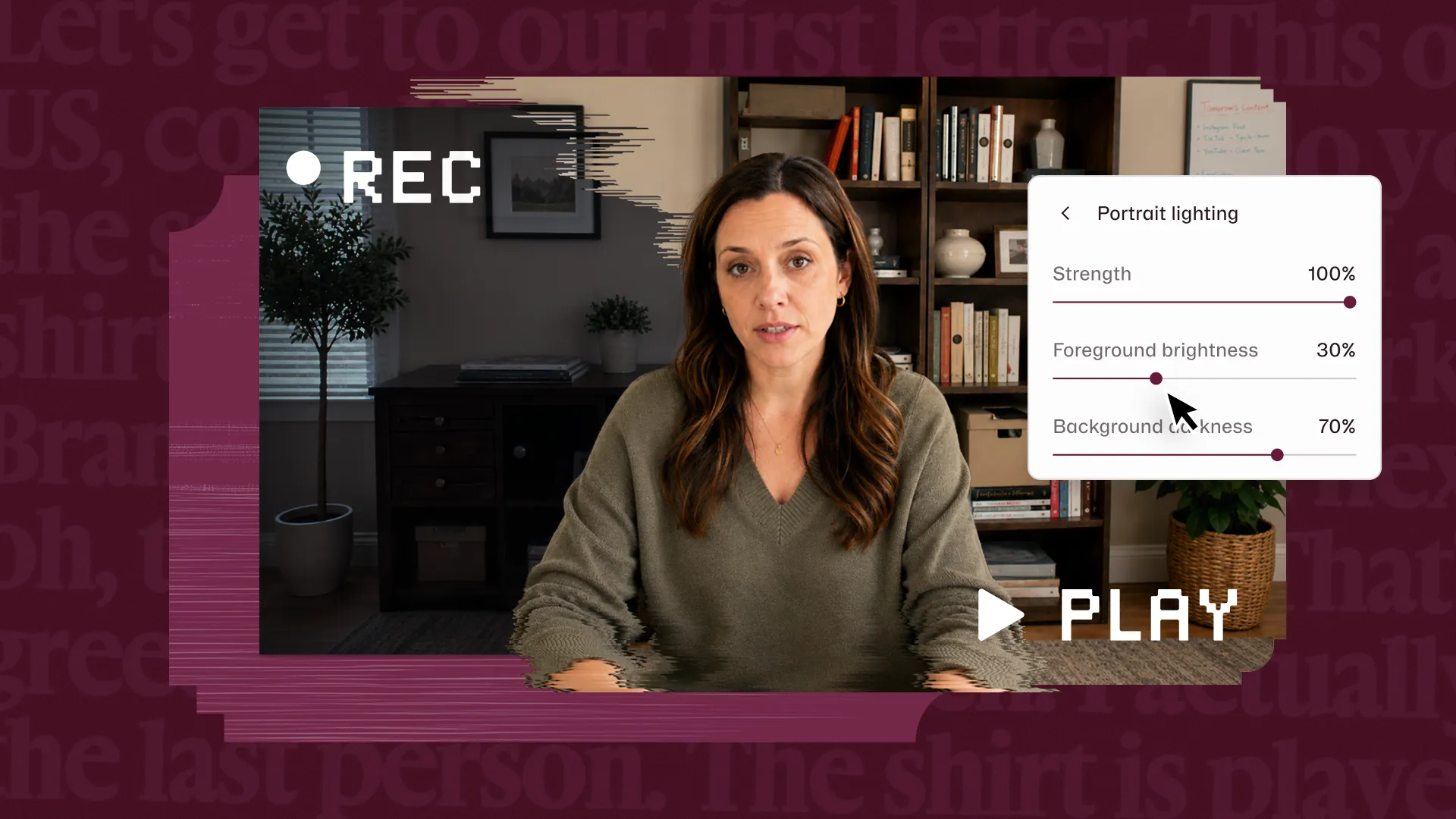
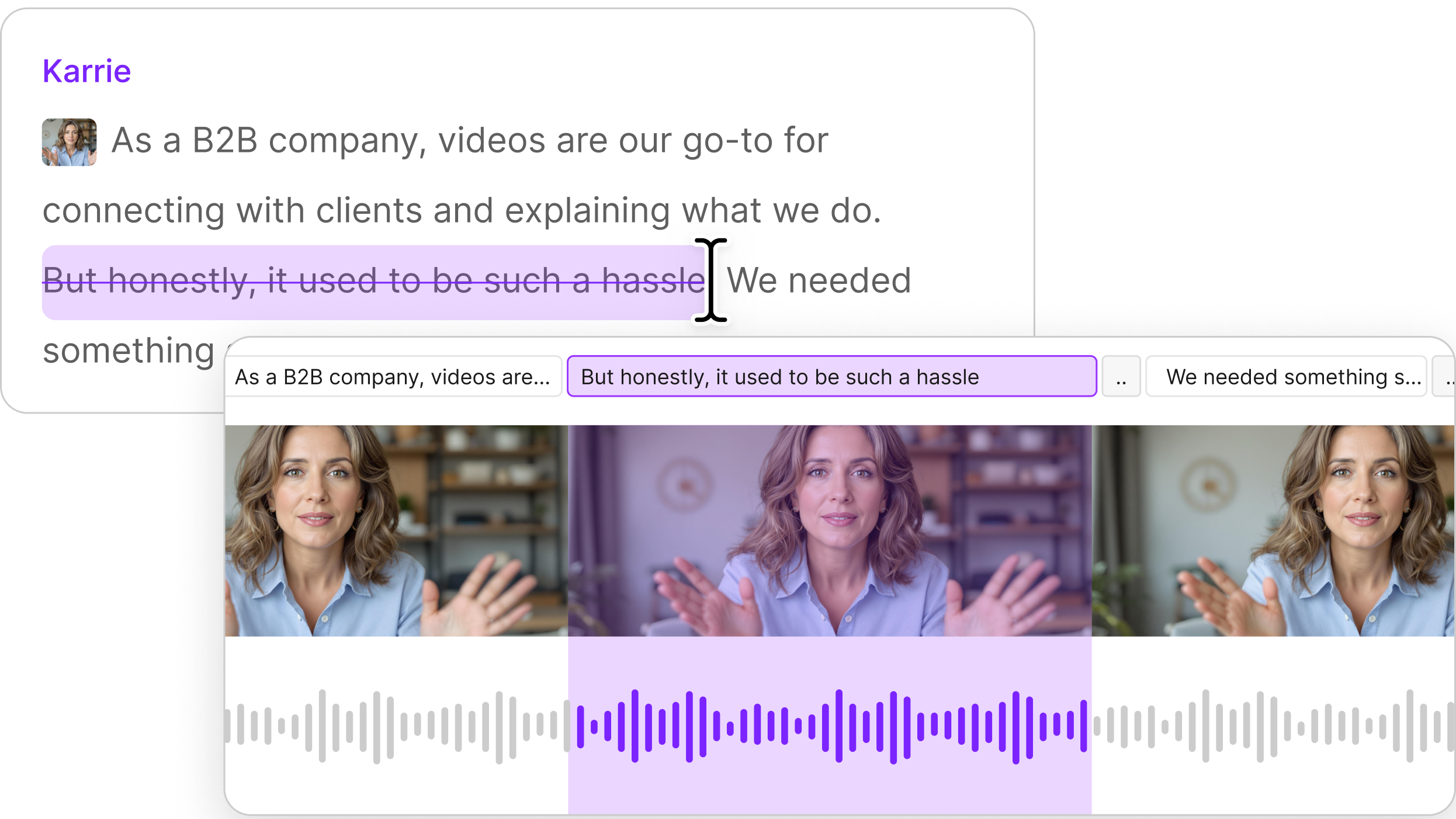
An AI video editor automates the tedious parts of a cut: removing filler words and silences, generating captions, reframing for vertical, and finding clip-worthy moments. The useful ones let you override every automated decision, because the automation is right most of the time and not all of it. Descript does the automation and gives you a full editor to fix what it gets wrong.
The best AI video editor is not necessarily the one with the longest feature list. It is the one that handles the repetitive parts of your workflow without taking away your ability to fix what the AI gets wrong.
That looks different depending on what you make.
A podcaster may care about transcription and audio cleanup. A social team needs reframing and short-form clips. A professional editor still needs a real timeline.
Anyone publishing regularly also needs consistent brand styling, reliable output, and a workflow that can keep up as video volume grows.
We compared nine AI video editors around those jobs, with an emphasis on editing existing footage rather than simply generating new video.
Key takeaways
- Best for transcript-based editing: Descript. Edit spoken video by editing the transcript, then use AI for cleanup, captions, clips, and audio
- Best for social video: CapCut. Its mobile-friendly workflow, auto-reframing, captions, and templates suit short-form production
- Best for long-to-short repurposing: OpusClip. It is built specifically to find moments in long videos and turn them into social clips
- Best for professional timeline control: Adobe Premiere and DaVinci Resolve. Both pair serious manual editing tools with growing AI feature sets
- Best free options: Descript, CapCut, and DaVinci Resolve. But compare export resolution, watermarks, and AI limits before committing
How to choose the right AI video editor for you
Start with the kind of video you make most often. The best AI video editing software for a weekly podcast is probably not the best choice for a color-heavy short film or a TikTok-heavy social calendar.
If you need to split one long video into a dozen smaller assets, prioritize repurposing. If every cut matters, prioritize manual control. And if “free” is your main requirement, check what happens at export. That is often where the fine print finally appears.
Side note: If generation is what you need instead of editing, see our guide to AI video generator tools.
How we chose this list of AI video editors
We focused on tools people can use to edit or meaningfully repurpose video, rather than filling the list with AI avatar and text-to-video generators.
Each option was evaluated around five practical questions:
- How much useful editing work can its AI handle?
- Can you manually correct automated decisions?
- How steep is the learning curve?
- What does the free or entry-level plan actually include?
- What happens when you export, including resolution and watermarks?
We also considered who each editor suits. There is little value in recommending a professional timeline editor to someone who needs five captioned clips before lunch.
Best AI video editors at a glance
You probably do not need nine free trials open at once. Start with the kind of editing work you actually need to do, then narrow the field from there.
The table below compares what each AI video editor is known for, which AI capability stands out, where you can use it, and how much it costs to get started. The goal is not to crown one editor for every creator. It is to make the shortlist a lot shorter.
Pricing and plan availability can change by region or billing cycle. CapCut specifically directs users to check current subscription pricing in-app because rates vary by region and platform.
The 9 best AI video editors by use case
AI video editors are starting to share a lot of the same features. Captions, background cleanup, reframing, and generative tools appear in more products every year. The bigger differences show up in how each editor fits into the work you already do.
Some are built around spoken content. Others specialize in social clips, remote recording, professional timelines, branded assets, or prompt-first creation. Just as important, they give you different levels of control once the AI has made its first pass.
Here is what each tool is known for, where its strengths lie and what to consider before choosing one.
1. Descript: Best for transcript-based video editing
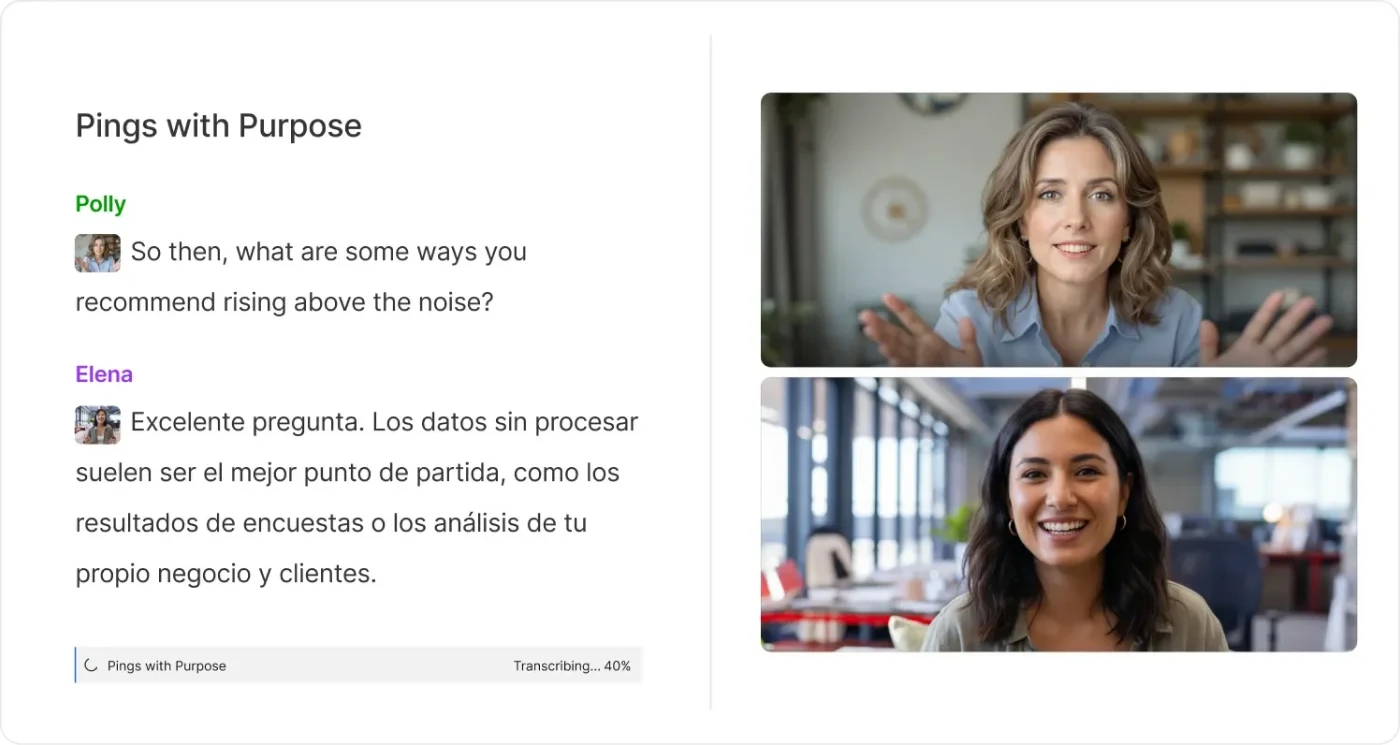
Descript is strongest when the video revolves around people talking: podcasts, interviews, explainers, webinars, and YouTube videos.
Descript automatically transcribes your videos and lets you edit the transcript by deleting or rearranging words. Underlord can help with cleanup and other repetitive editing tasks.
Descript AI tools also cover filler-word removal, Studio Sound, captions, short-form clips, AI speech, and video regeneration.
Descript advantages
- Moves easily between transcript-based and visual editing. You can make fast structural changes in the transcript, then refine scenes, timing, layers, and other visual details without moving the project into another editor
- Keeps more of the spoken-content workflow in one place. Recording cleanup, captions, audio enhancement, clip creation, and publishing can happen inside the same project instead of requiring a chain of separate tools
- Makes repurposing easier after the main edit is finished. A long interview, podcast, or webinar can become shorter clips and captioned social assets without starting over from the raw recording
- AI-assisted edits remain editable. You can review and change the result instead of treating the AI’s first decision as the finished cut
- Supports collaborative content workflows. Shared projects and review tools make it easier for producers, editors, and marketers to work from the same source rather than passing exports back and forth
- The Free plan includes 1 media hour, 100 AI credits, and exports up to 720p. Hobbyist starts at $16 per person per month with annual billing.
Considerations
- Descript does not currently support editing on mobile browsers, Chromebooks, or tablets such as iPads. You will need the desktop app or a supported desktop browser for the full editing experience
- Full access to Underlord and 4K exporting requires the Creator plan.
2. CapCut: Known for social-first video editing
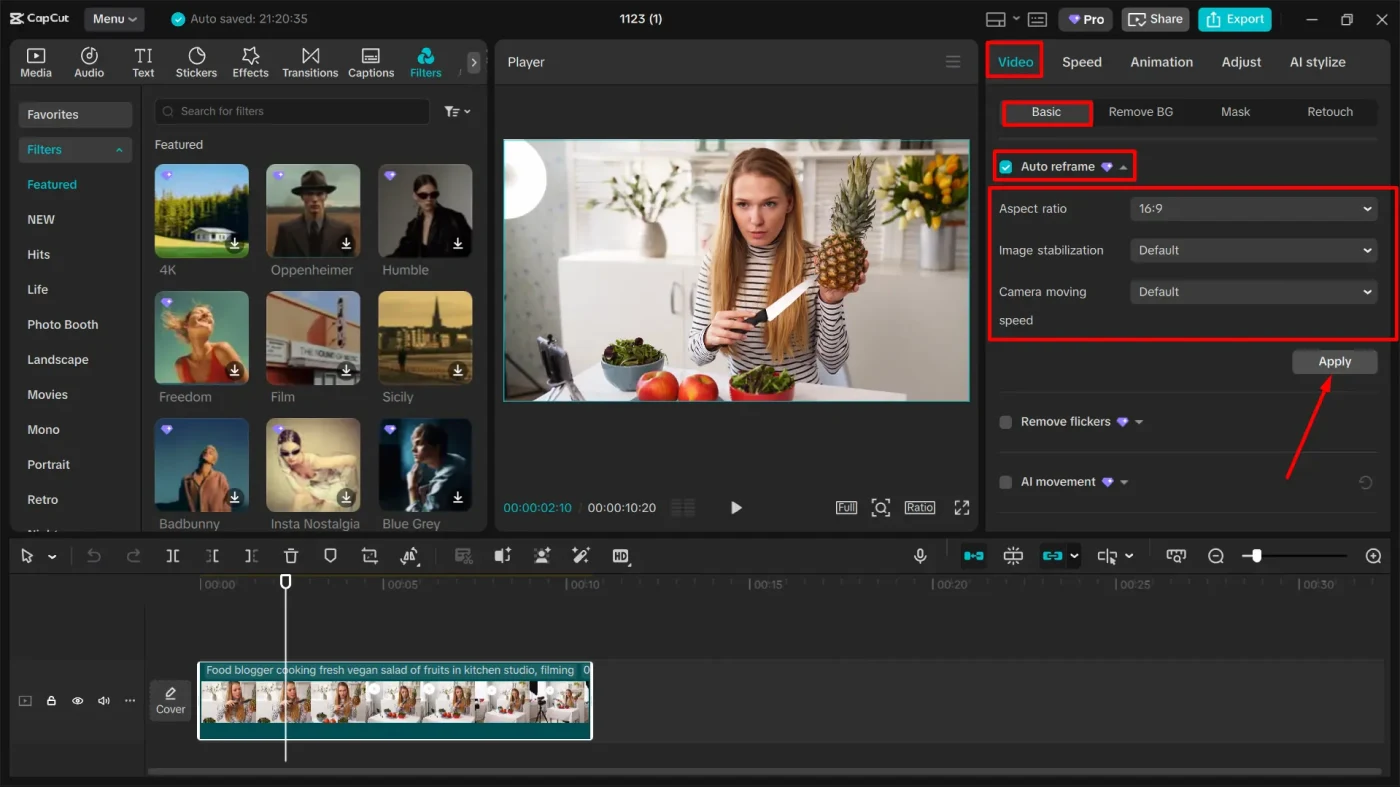
CapCut is built around the pace and formats of social video. Its AI tools include Auto Reframe, automatic captions, filler-word removal, smart media search, background removal, and social-ready templates. You can also open the timeline and manually adjust the result.
Its web, desktop, iOS, and Android apps make it especially practical for creators who move between devices or edit close to where they publish. CapCut offers a free version, while paid pricing varies by region and platform.
Pros
- Strong set of AI tools for short-form and vertical video
- Web, desktop, and mobile editing support a flexible social workflow
- Manual timeline controls let you refine automated edits rather than starting over
Considerations
CapCut packs a large number of tools into the interface, which can take some getting used to. Pricing also varies by market and platform, so teams comparing paid plans should check the current rate for their region rather than relying on one universal price.
3. OpusClip: Known for turning long videos into short clips
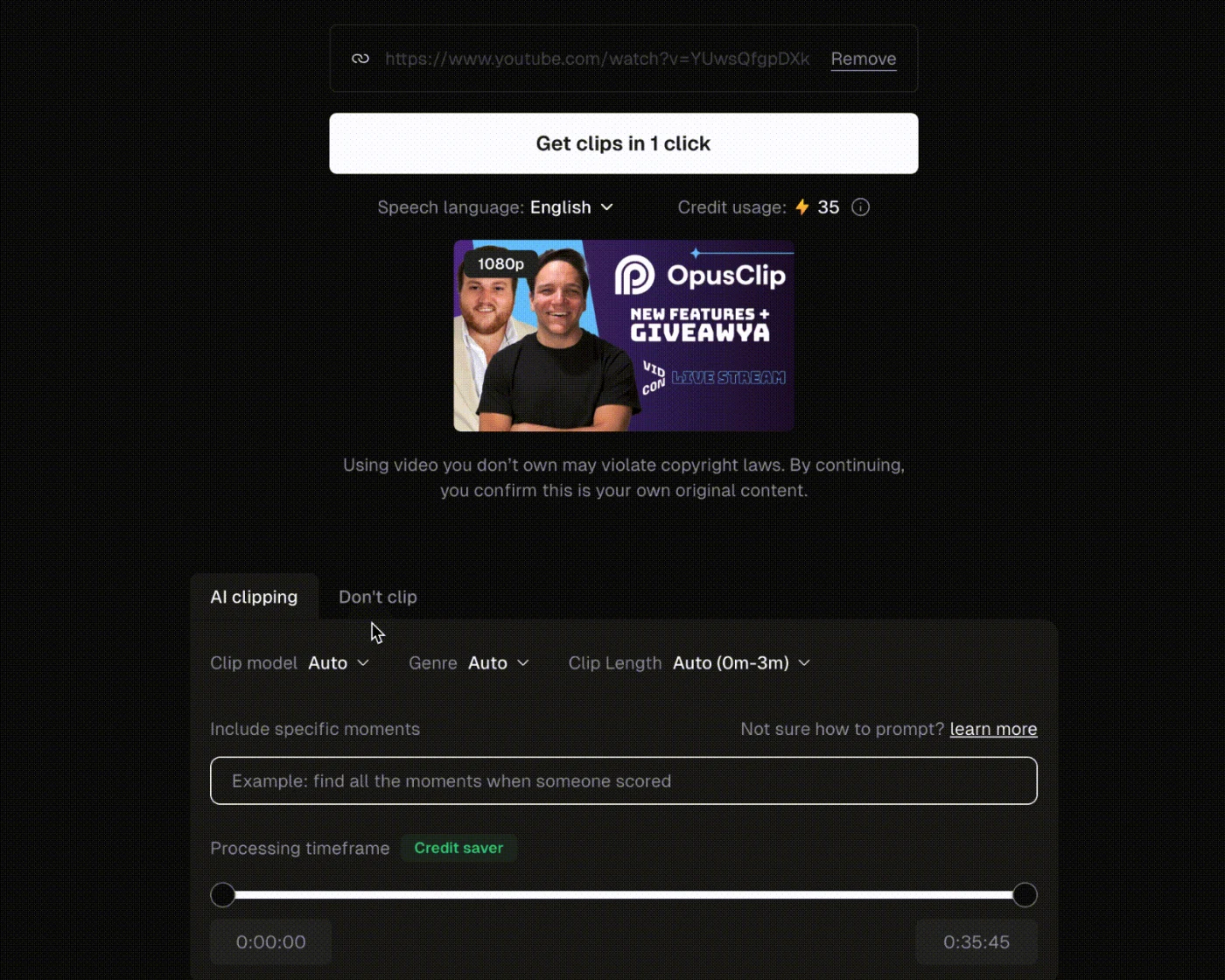
OpusClip focuses on one of the most common repurposing jobs: finding short, shareable moments inside longer recordings. Its AI analyzes speech, visuals, sound, emotion, and other signals, then adds captions and reframes clips for social platforms.
That specialization makes it especially useful for podcasts, webinars, interviews, and other long recordings you want to repurpose into multiple clips. Paid plans also offer text- and timeline-based editing to refine clips after generation.
The Free plan includes 60 monthly credits and 1080p output. Starter costs $15 per month.
Pros
- Purpose-built workflow for long-to-short content repurposing
- AI handles clip selection, captions, and social reframing together
- Paid plans add editing controls for refining generated clips
Considerations
OpusClip is more specialized than a full long-form video editor, so it makes the most sense when short-form repurposing is the primary job. Free clips also carry a watermark and cannot be edited after generation, making the paid tiers more relevant for regular publishing.
4. Riverside: Known for recording and editing interviews in one workflow
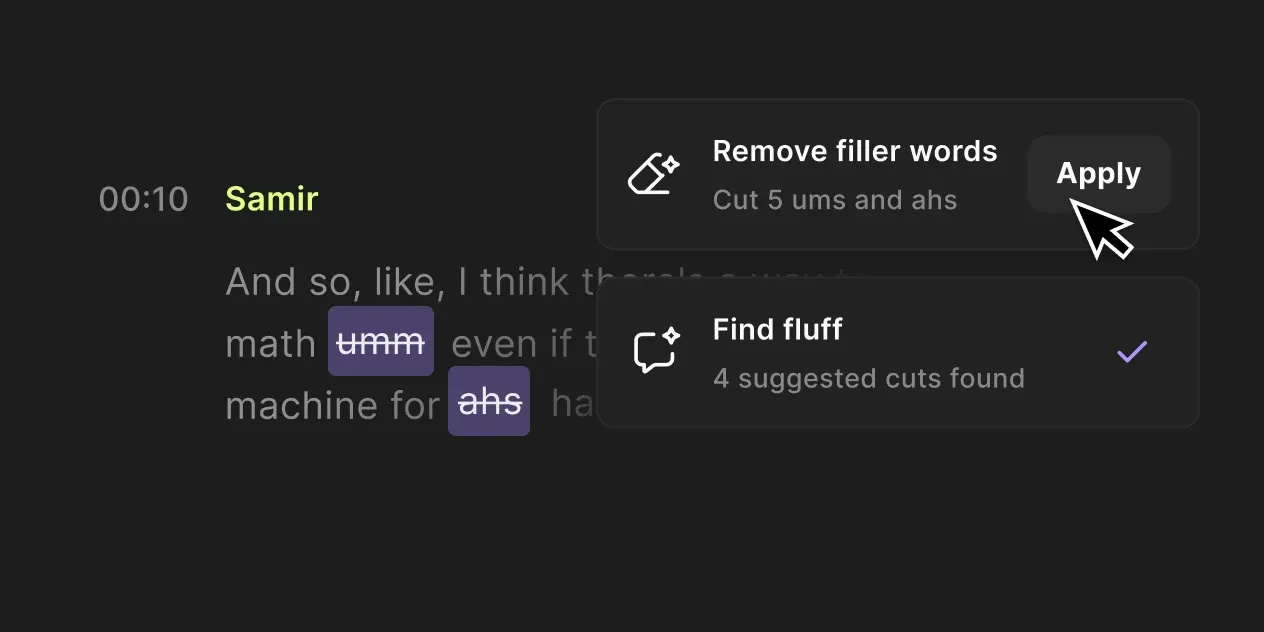
Riverside brings recording and post-production closer together. Teams can capture remote interviews or podcasts, edit from a transcript, clean up audio, add captions, and use Magic Clips to identify moments for social content.
That combination suits podcast and interview teams that want fewer handoffs between recording, editing, and repurposing. The Free plan includes 720p video with a watermark. Standard starts at $15 per month when billed annually and adds 4K video and removes the watermark from regular recordings.
Pros
- Recording and editing happen within the same workflow
- Transcript-based editing suits interviews, podcasts, and other spoken content
- Magic Clips creates a direct path from long recordings to shorter social assets
Considerations
Riverside is particularly well suited to content that begins with a remote recording. Teams that need extensive compositing, color work, or detailed timeline editing may still want a more traditional post-production tool for the final stages.
5. Adobe Premiere: Known for professional editing with AI assistance
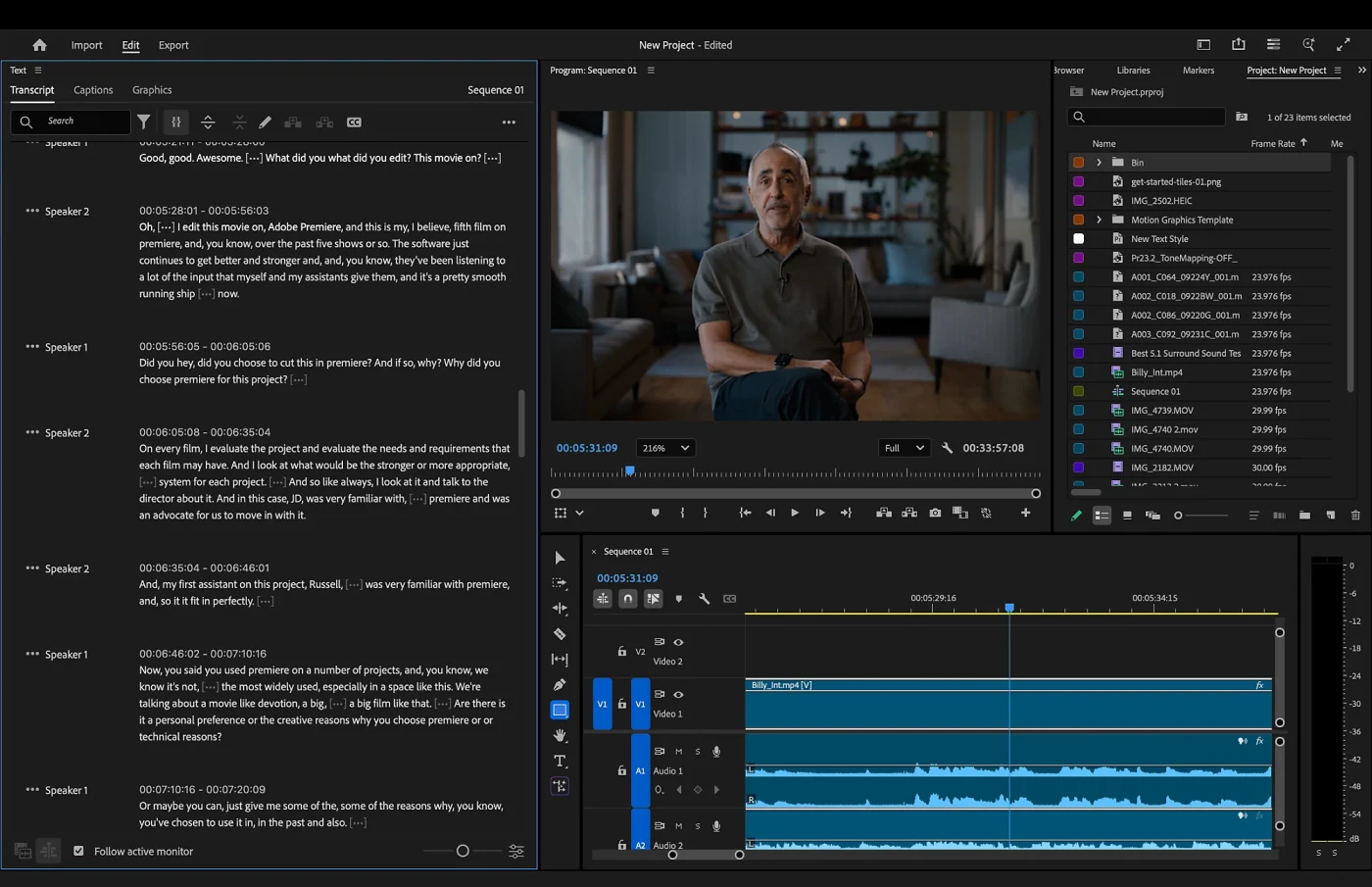
Adobe Premiere pairs a full professional timeline with AI tools designed to speed up specific parts of the editing process, not replace the editor.
Current features include Media Intelligence for finding footage with natural-language searches, Text-Based Editing for building rough cuts from transcripts, Object Mask for tracking subjects, Enhance Speech, and Firefly-powered Generative Extend for extending video or ambient audio around an edit.
Premiere starts at $22.99 per month on an annual commitment and includes 25 monthly generative credits.
Pros
- Extensive manual control for detailed professional editing
- AI features assist with search, rough cuts, audio, masking, and selected generative tasks
- Fits naturally into broader Adobe Creative Cloud production workflows
Considerations
Premiere offers more depth than many creators need for straightforward social or talking-head edits, and that depth comes with a steeper learning curve. Its subscription model also makes the most sense for people who edit regularly enough to use the broader professional toolset.
6. DaVinci Resolve: Known for advanced editing with a strong free tier
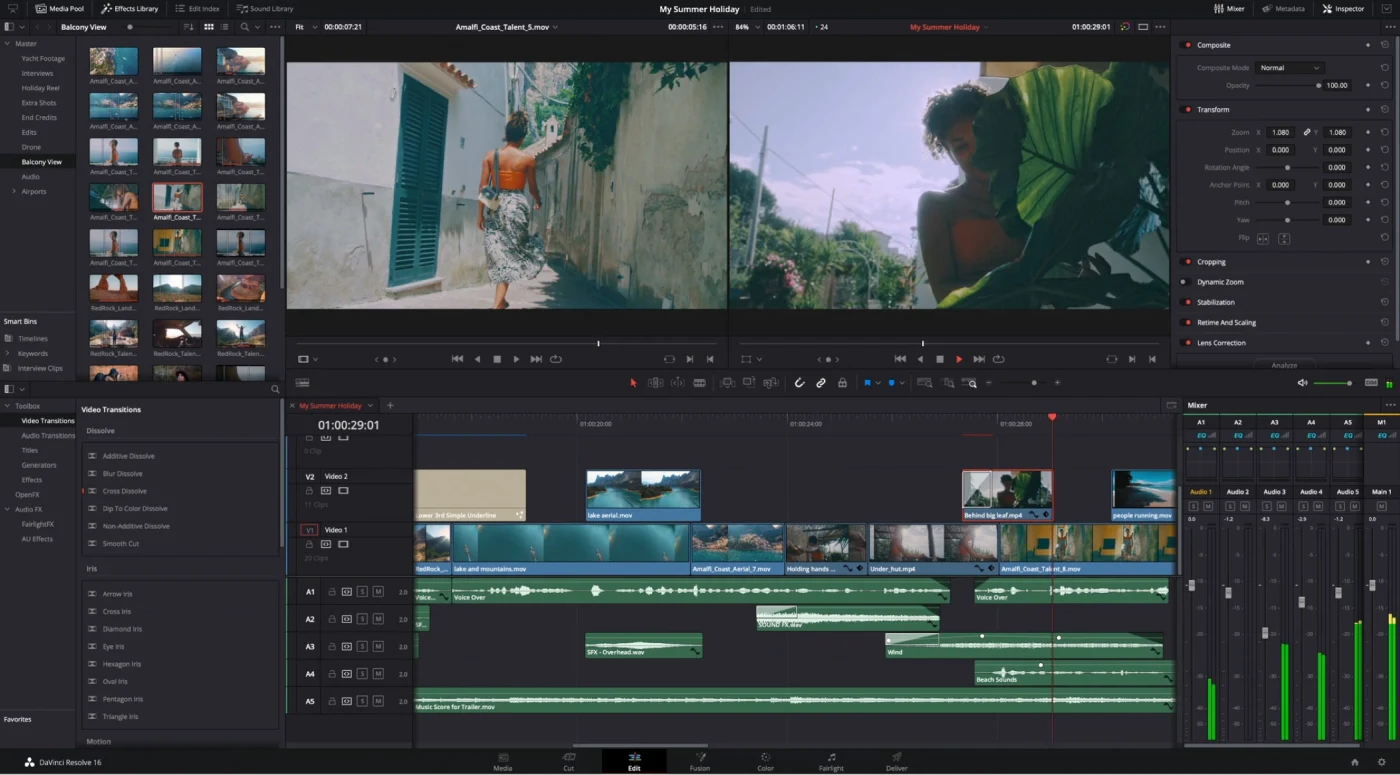
DaVinci Resolve combines editing, color, visual effects, motion graphics, and audio post-production in one desktop application. Its free version supports editing up to Ultra HD (3840×2160) at 60 fps, giving creators strong production capabilities without a subscription.
Resolve Studio adds the DaVinci AI Neural Engine, text-based editing, AI voice isolation, noise reduction, Magic Mask, and other advanced tools. Resolve Studio costs $295 as a one-time purchase.
Pros
- Feature-rich free version supports serious editing work
- Strong color, audio, effects, and timeline tools live in the same application
- Studio adds AI capabilities without moving to a recurring subscription
Considerations
DaVinci Resolve is designed for more in-depth post-production work, so its interface and feature set take longer to learn than those of lighter AI editors. Many of its more advanced AI capabilities also sit in the paid Studio version rather than the free edition.
7. Canva: Known for branded marketing and social videos
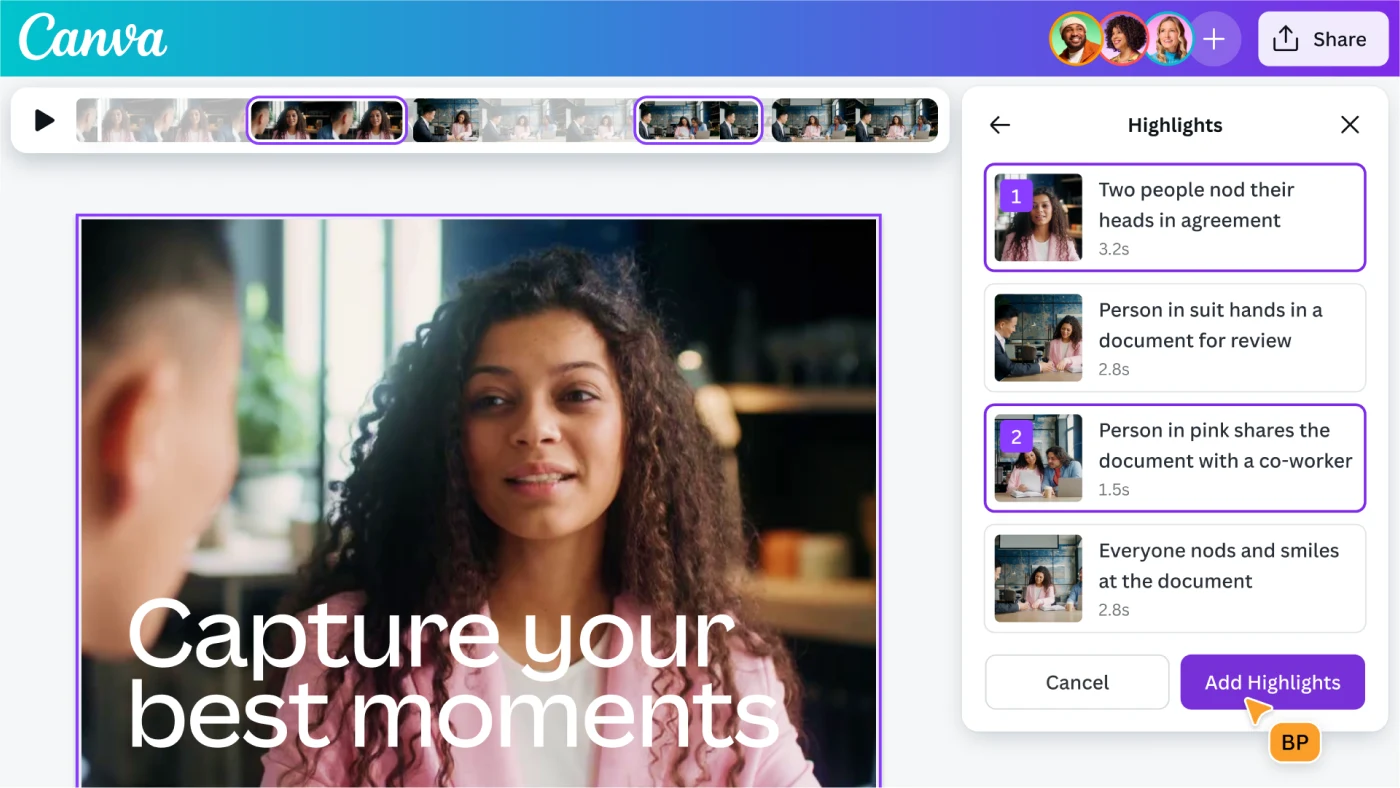
Canva works well when video is one part of a broader brand-content workflow. Its editor includes trimming, captions, Beat Sync, voice enhancement, Auto-trim, Highlights, templates, and the visual design tools Canva users already know.
That makes it useful for marketing teams producing video alongside presentations, graphics, ads, and other campaign assets. If you are making videos for social media, keeping those formats within a single visual system can reduce back-and-forth between tools.
Canva has a free plan. Canva Pro costs $180 per year for one person.
Pros
- Brand controls and templates help keep video consistent with other marketing assets
- Familiar design interface lowers the barrier for non-specialist video editors
- Video can sit alongside graphics, presentations, and social content in the same workspace
Considerations
Canva is strongest when design consistency and speed matter more than deep post-production control. Longer or technically complex projects may benefit from an editor with more detailed timeline, audio, color, and media-management tools. AI usage allowances also vary by plan.
8. InVideo: Known for prompt-first video creation
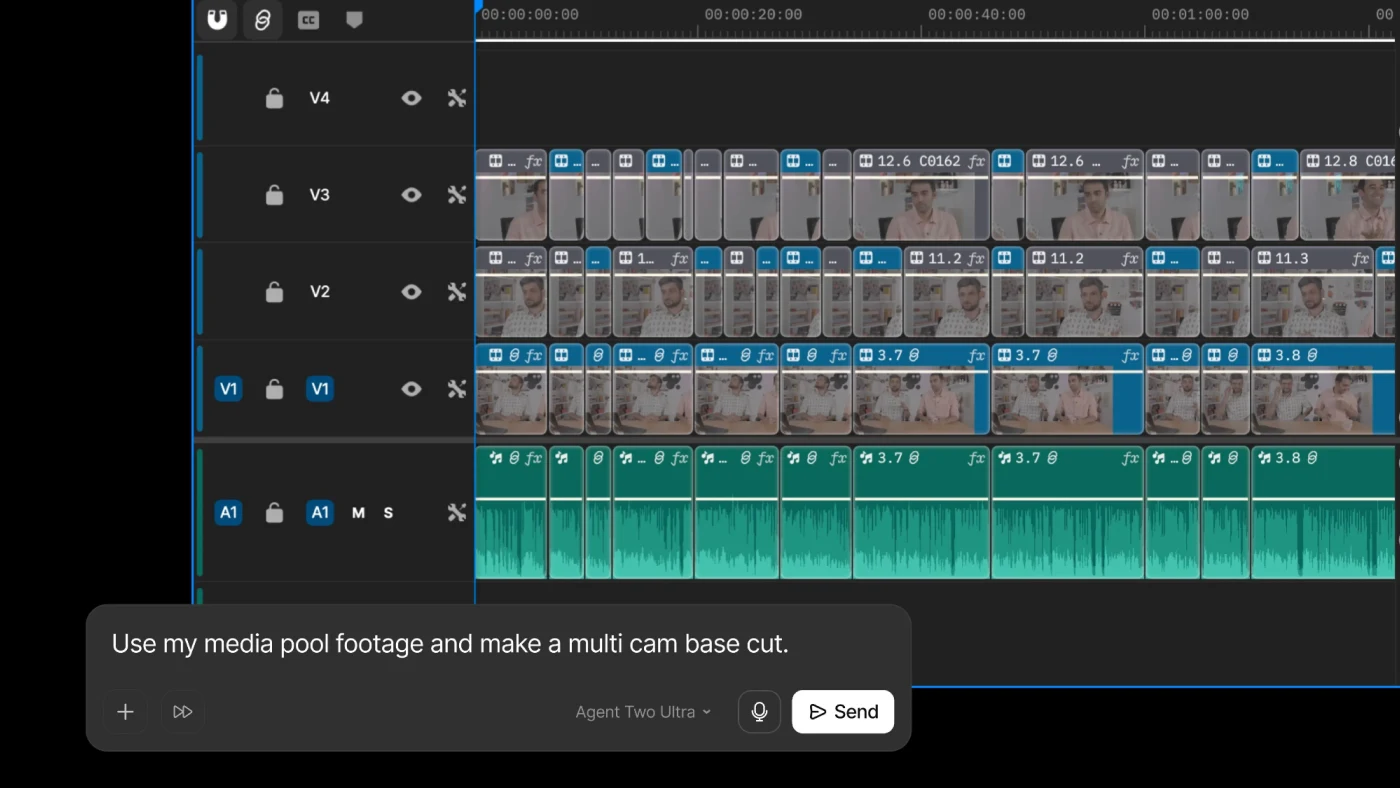
InVideo takes a generation-first approach to video. Its AI platform can start from a prompt and work with video, image, voice, music, and stock assets to assemble a finished piece.
That makes it useful for marketers who want to begin with an idea or script rather than a folder of footage. Its AI agent can also build longer videos from prompts, making it the most generation-oriented option in this comparison.
A free option is available, while paid plans currently start around $17 per month with annual billing.
Pros
- Prompt-first workflow reduces the amount of manual assembly needed to begin a video
- Broad selection of generative models and stock assets supports different content formats
- Useful for teams creating marketing videos without extensive source footage
Considerations
InVideo sits closer to AI video generation than traditional footage-first editing. Creators who want detailed control over existing footage may prefer one of the timeline- or transcript-based editors on this list. Usage is also credit-based, so the cost of frequent generative work can vary with the workflow.
9. VEED: Known for browser-based AI video editing
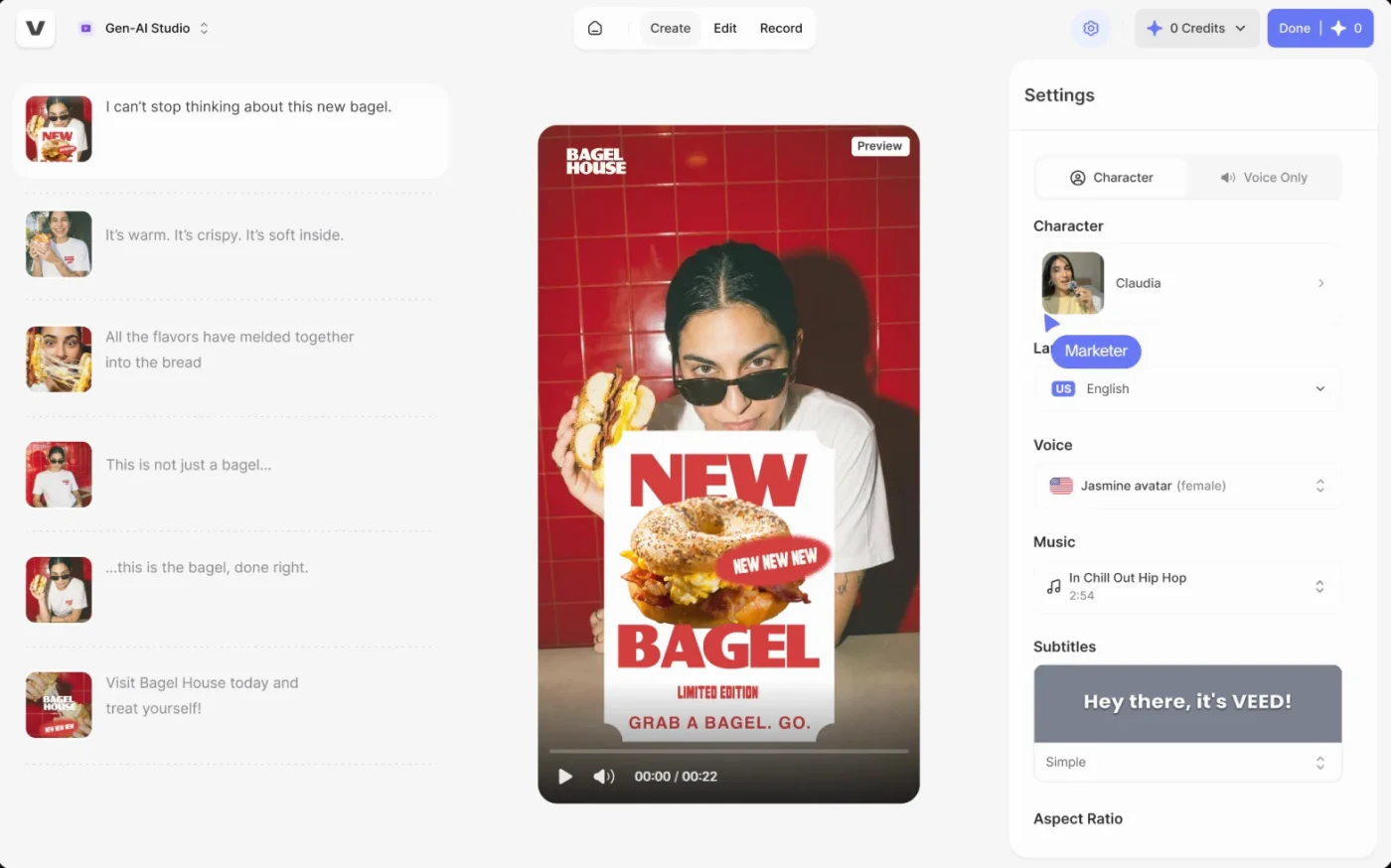
VEED combines a browser-based editor with AI assistance for common production tasks. Its current tools include Auto Edits, AI B-roll, audio cleanup, text-based editing, captions, background tools, and AI creation features.
It is a practical option for creators and teams that want to edit online without installing a full desktop production suite. VEED also offers iOS and Android apps connected to the same account and projects.
The Free plan exports at 720p with a watermark. Paid plans start at $9 per month with annual billing or $19 monthly.
Pros
- Browser-first editing makes it easy to start without dedicated desktop software
- AI and manual editing tools coexist in the same workflow
- Web and mobile access suit teams working across devices
Considerations
The Free plan is best suited for trying the editor, as exports are limited to 720p and include a watermark. Teams that need higher-resolution output or more advanced features should compare the paid tiers against how frequently they expect to publish.
Red flags to watch for in an AI video editor
No manual override on automated edits
AI can save time right up until it makes one strange cut in an otherwise good video. Look for an editor that lets you adjust individual AI decisions through a timeline, transcript, or editable clip.
Trial test: Can you fix one bad cut without asking the tool to regenerate the entire video?
Watermarks and export limits buried in the free tier
An AI video editor free plan can look generous until you hit export limits. Watermarks, 720p limits, monthly caps, and restricted editing are common.
Trial test: Export a finished project before deciding the free plan works for you.
Rendering times that break your workflow
Cloud processing can become a bottleneck if every clip sits in a queue. Some vendors even differentiate plans by processing speed or priority, suggesting wait times can matter at higher volumes.
Trial test: Process and export a normal-length project during your trial, not a 20-second sample.
Transcription accuracy you cannot verify before you buy
A single accuracy percentage tells you very little about your footage. Accents, crosstalk, product names, technical jargon, and background noise can all change the result.
Trial test: Upload one of your messier real recordings and inspect the transcript and captions before paying.
AI voices and avatars that look or sound synthetic
AI presenters and voices can be useful, but they can also flatten every video into the same cadence and visual style. That is a problem when your content depends on personality or brand recognition.
Trial test: Generate something you would genuinely publish and watch it without the product demo playing beside it.
No clear policy on your data or your voice
If you upload client footage or create a voice clone, review how the provider stores that data, whether it can use it for model training, and what happens after you cancel. Teams handling sensitive footage should also evaluate the editor’s AI, compliance, and security practices.
Trial test: Find clear answers about training, consent, retention, and deletion before uploading sensitive footage.
Get started with Descript’s AI video editor
Descript’s main difference is simple: you can edit video by editing the transcript.
Upload or record your footage, and Descript turns the spoken content into text. Delete a sentence in the transcript and the corresponding video disappears. That gives you the speed of AI-assisted editing without hiding the actual edit.
From there, you can:
- Add subtitles and captions
- Tune out background noise with Studio Sound
- Remove retakes in a single click
- Find highlights to repurpose into short-form clips
- Add a green screen to your videos
Underlord can handle repetitive work, but you can still open the project and change the result yourself. That is the part we think matters most.
Start with Descript’s Free plan to test the workflow, then upgrade if you need more media hours, AI credits, or higher-resolution exports.
Frequently asked questions
Which AI video editor is the best?
Descript is a strong overall choice for talking-head videos, podcasts, interviews, and other speech-heavy content because it combines transcript editing with AI cleanup and manual control. For social-first editing, consider CapCut or OpusClip. Premiere and DaVinci Resolve are better suited to advanced timeline work.
What is the most realistic AI video editor?
If “realistic” means editing real footage without making the finished video feel obviously AI-produced, look for tools that automate cleanup while leaving you in control of the footage. Descript, Premiere, and DaVinci Resolve all combine AI assistance with manual editing rather than forcing a fully generated result.
Can AI edit videos well?
Yes, especially for repetitive jobs such as transcription, captions, silence or filler removal, reframing, audio cleanup, clip selection, and rough cuts. AI is less reliable when decisions depend on timing, taste, story, or visual context. The best AI video editors let you correct those decisions manually.
Is there a free AI video editor?
Yes. Descript, CapCut, DaVinci Resolve, Canva, Riverside, OpusClip, InVideo, and VEED all offer free ways to get started. The limits vary widely. Check for watermarks, resolution caps, AI credits, editing restrictions, and export limits before building a recurring workflow around a free plan.