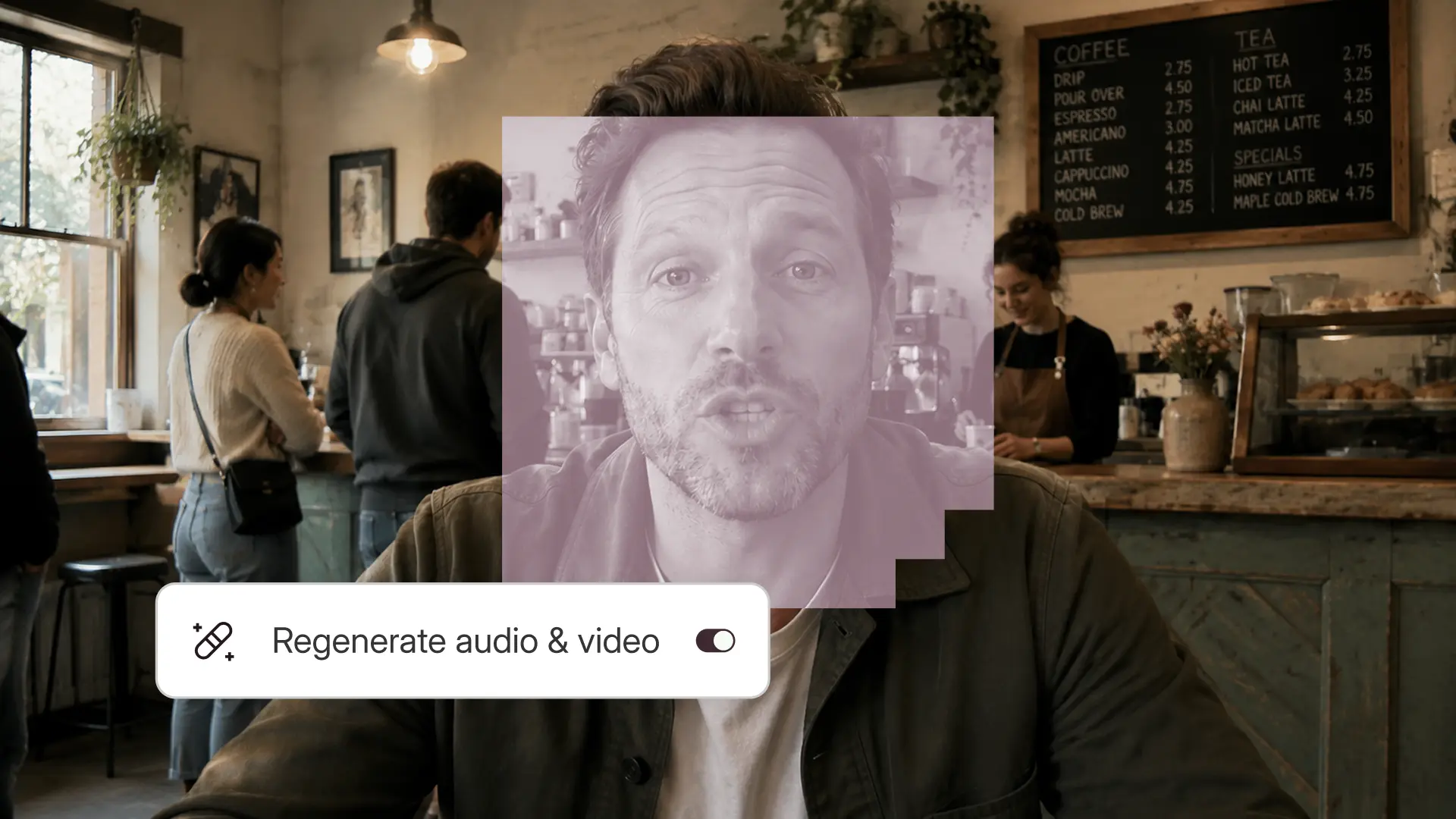
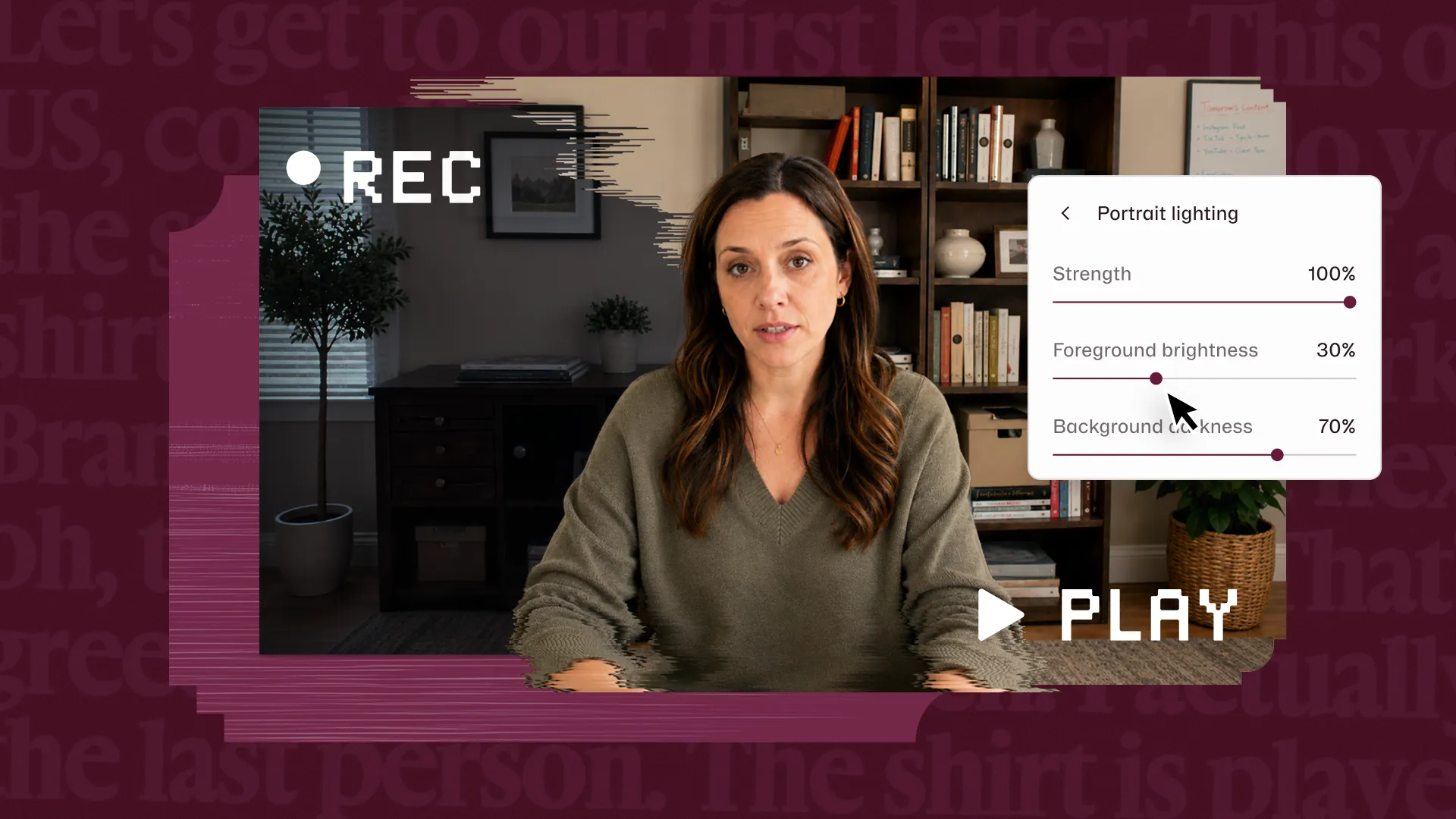
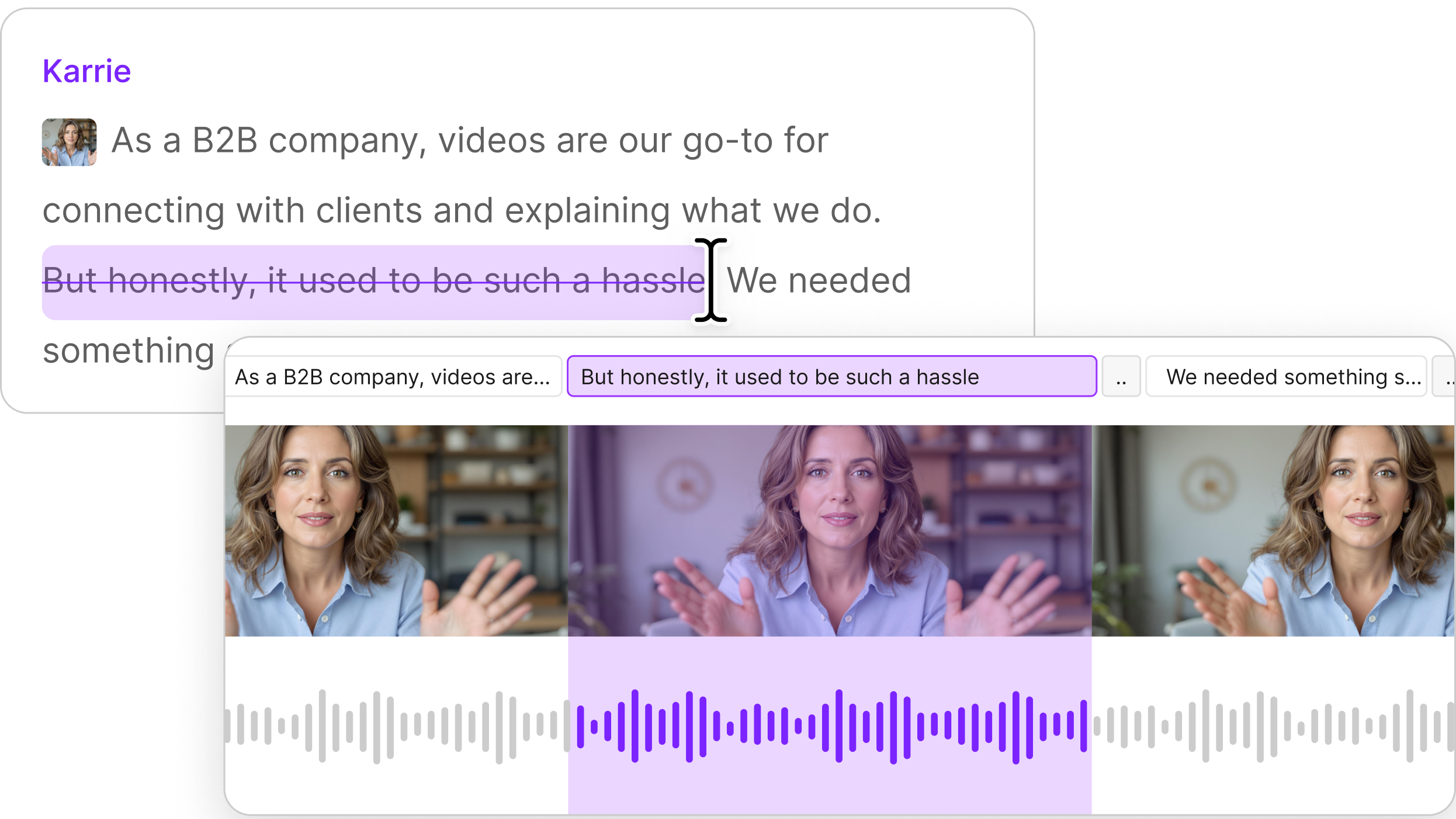
Video editing software ranges from free timeline editors to subscription suites built for teams. The split that matters is timeline editing against transcript editing, because that decides how fast a rough cut comes together. Descript edits video by editing text, then exports for whichever platform it is headed to.
Most desktop video editing software asks you to work on a timeline: trim clips, stack tracks, scrub around until you find the moment you need.
Some, like Descript, use text-based editing. The transcript becomes the main editing surface, so changing the words changes the video.
Neither approach is automatically better. The right editor depends on how much control you need, how much editing you want to learn, and what computer you use.
This guide focuses on software you can run on a desktop or laptop. If your workflow starts on your phone, see our guide to the best video editing apps.
For everyone else, start with three things: skill level, operating system, and price model. Those will narrow a 12-tool shortlist surprisingly fast.
Key takeaways
- Best for text-based editing: Descript. It suits podcasts, interviews, tutorials, and YouTube videos where spoken content drives the edit
- Best professional subscription editor: Adobe Premiere (formerly Premiere Pro). It combines a traditional professional timeline with deep media, audio, effects, and text-based editing tools
- Best free editor with room to grow: DaVinci Resolve. The free edition already covers serious editing, color, audio, and effects work
- Best Mac-first professional editor: Final Cut Pro. Its Magnetic Timeline and Apple silicon optimization make it a strong fit for committed Mac users
- Best beginner options: Filmora, PowerDirector, Clipchamp, and iMovie. The right pick depends mostly on your operating system and how far you expect your editing skills to grow
Best video editing software at a glance
You don’t need to download 12 editors and spend the weekend figuring out which welcome screen annoys you least.
Use the table to eliminate anything that does not fit your operating system, budget, or comfort level, then compare the remaining options in more detail below.
Disclaimer: Prices were checked in September 2026 and reflect published US pricing. Regional prices, taxes, and limited-time promotions may differ.
Best video editing software for text-based editing
Text-based editing lets you work from the spoken words instead of searching through a timeline. Descript builds its editing experience around this approach.
Descript: Known for text-based editing
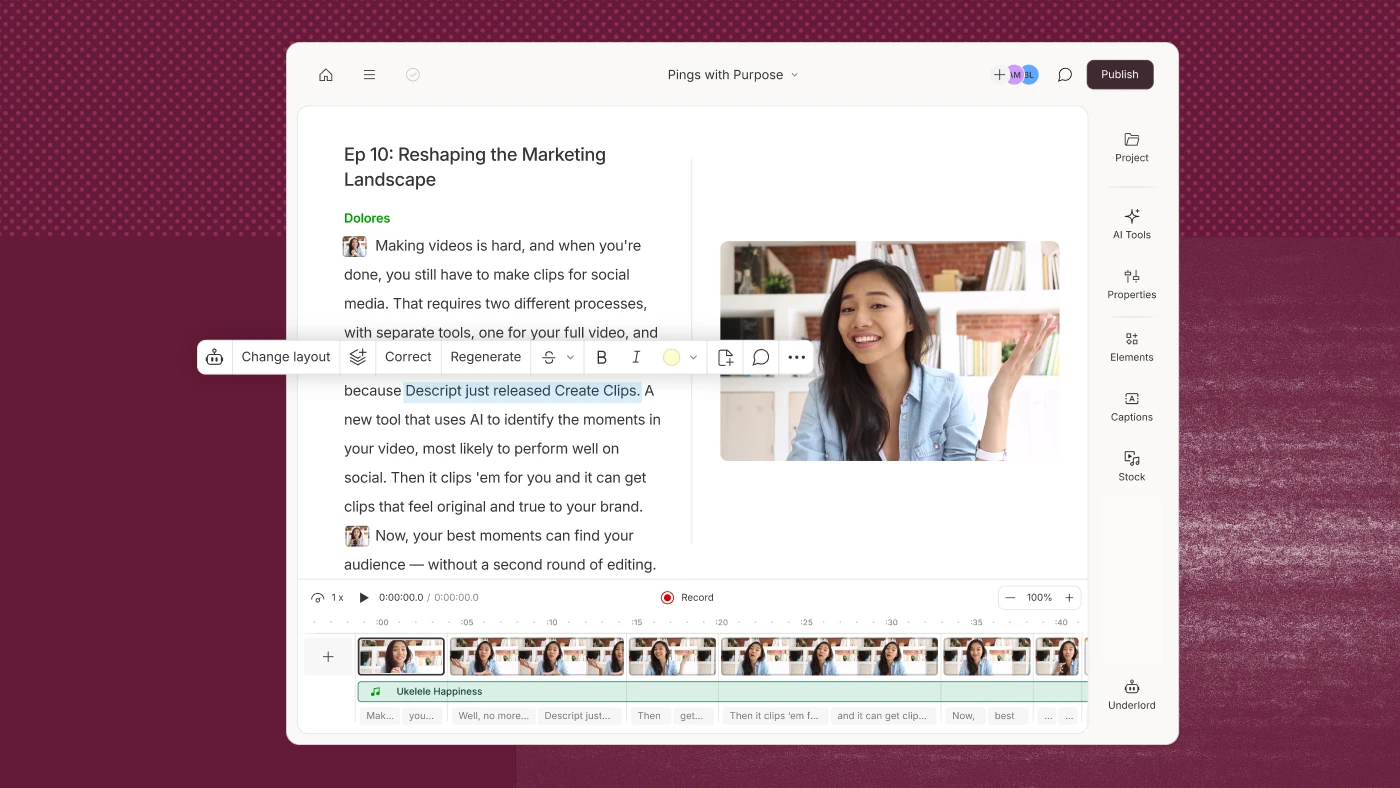
Descript makes text-based editing the central editing surface for your project. Edit the transcript to cut, rearrange, or revise your recording. You can then refine scenes, visuals, captions, audio, and timing within the same project.
Adobe Premiere and PowerDirector use transcripts to build rough cuts within timeline editors. In Descript, the transcript serves as the editing surface for the full project.
Descript also includes AI Speech to add narration or replace lines without another recording session. If generated narration is central to your project, compare the best AI voice generators.
Price: The Free plan includes 1 media hour, 100 AI credits, and exports up to 720p. Hobbyist starts at $16/month with annual billing.
Considerations: Descript is strongest for spoken-word videos. A traditional editor may offer more control for complex effects, color work, or cinematic projects.
Best professional video editing software
Professional editing software earns its learning curve by giving you more control. The real choice is whether you want Adobe’s subscription ecosystem, DaVinci’s unusually deep free-to-pro path, Final Cut’s Mac-first workflow, or a Windows editor you can still buy outright.
Adobe Premiere (formerly Premiere Pro): Known for professional timeline editing
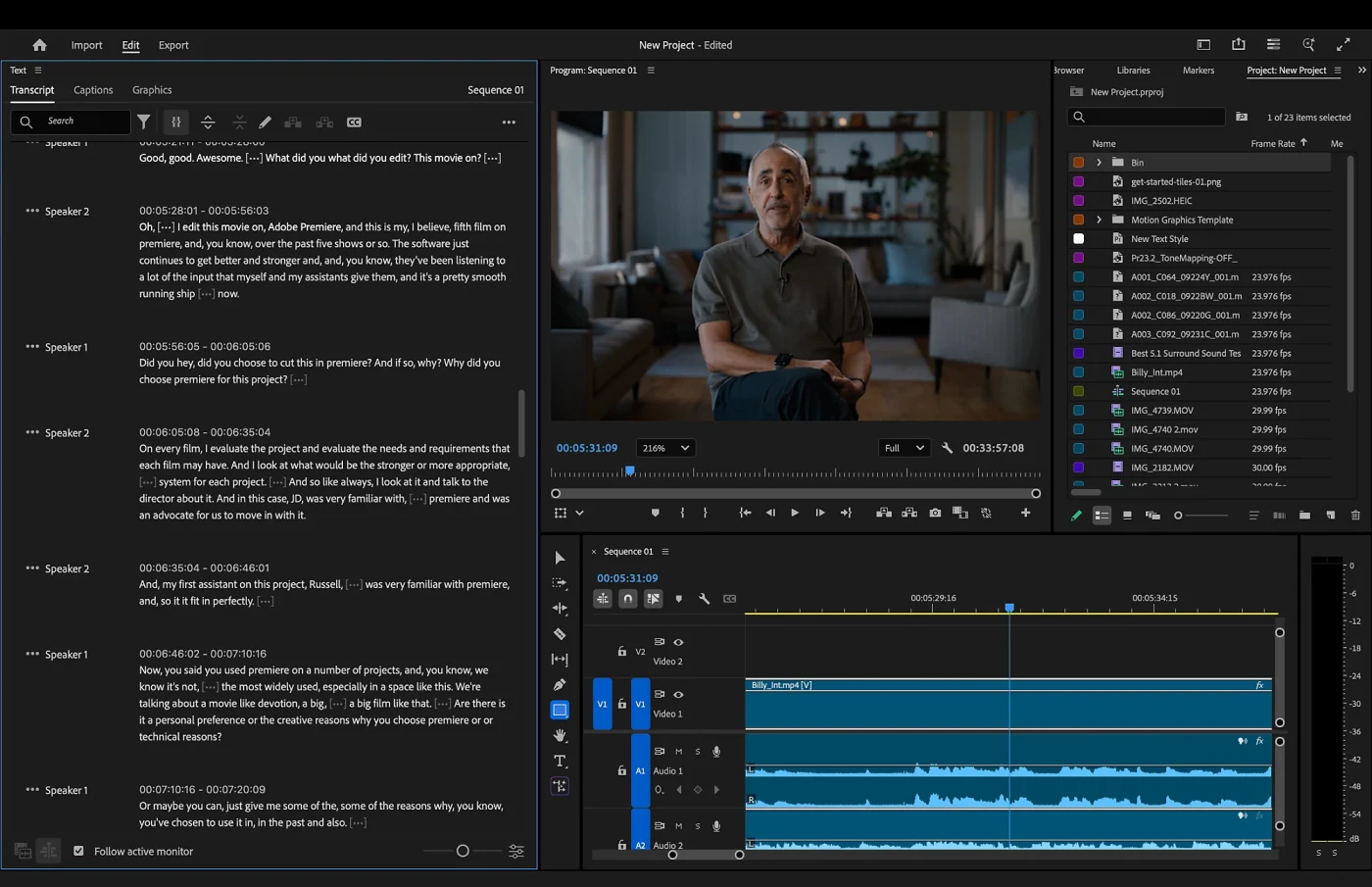
Adobe Premiere remains one of the broadest desktop editors in this comparison. It handles detailed timelines, effects, audio mixing, titles, media organization, and professional delivery.
Adobe’s Text-Based Editing automatically transcribes footage and helps you build a rough cut from the transcript. Those selections create and trim clips on the timeline.
You then use the timeline for timing, transitions, effects, and detailed adjustments. Media Intelligence helps you find footage through conversational searches.
Other tools support masking, speech enhancement, and selected generative edits. Descript uses text-based editing as the central workspace. Premiere uses it within a timeline-led workflow.
That makes Premiere relevant to experienced YouTubers, commercial editors, and teams already using Creative Cloud.
Price: $22.99/month with an annual commitment for the individual Adobe Premiere plan.
Considerations: Premiere offers extensive control, but it comes with ongoing subscription costs and a steeper learning curve. Transcript tools speed up assembly. Detailed editing remains timeline-led.
DaVinci Resolve: Known for professional editing without a required subscription
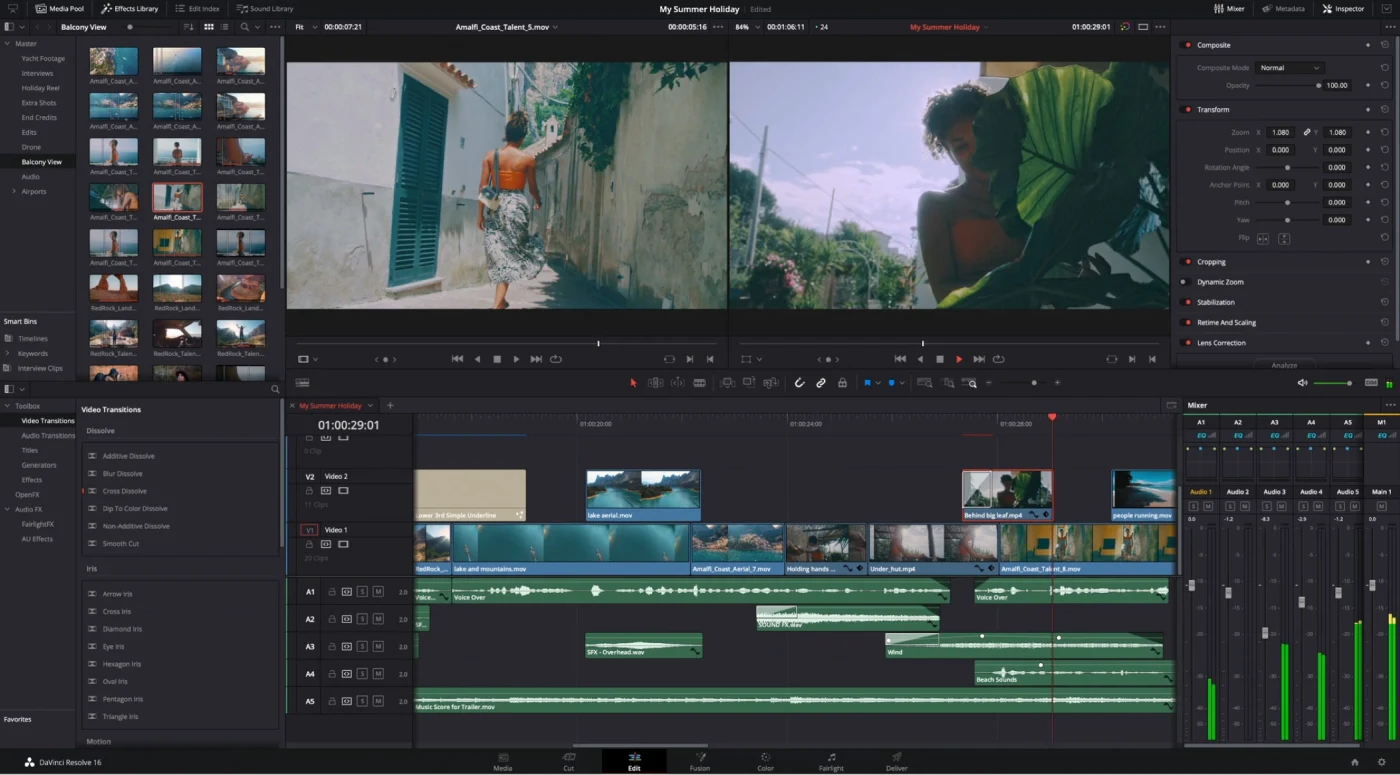
DaVinci Resolve combines editing, color correction, visual effects, motion graphics, and Fairlight audio in a single application. The free edition is unusually complete, which is why Resolve can legitimately sit in both the professional and free sections of this guide.
DaVinci Resolve 21 runs on Windows, macOS, and Linux. Resolve Studio adds the DaVinci Neural Engine and additional AI, effects, HDR, and audio capabilities for a one-time $295 purchase.
For editors who expect to spend serious time on color, sound, or post-production, Resolve offers one of the clearest upgrade paths from “I am learning this” to “this is now my editing system.”
Price: Free; Resolve Studio is $295.
Considerations: The free version is generous, but Resolve is still professional software. If you only need to trim a talking-head video, the interface may feel like renting a soundstage to record a voicemail.
Final Cut Pro: Known for professional editing on Mac
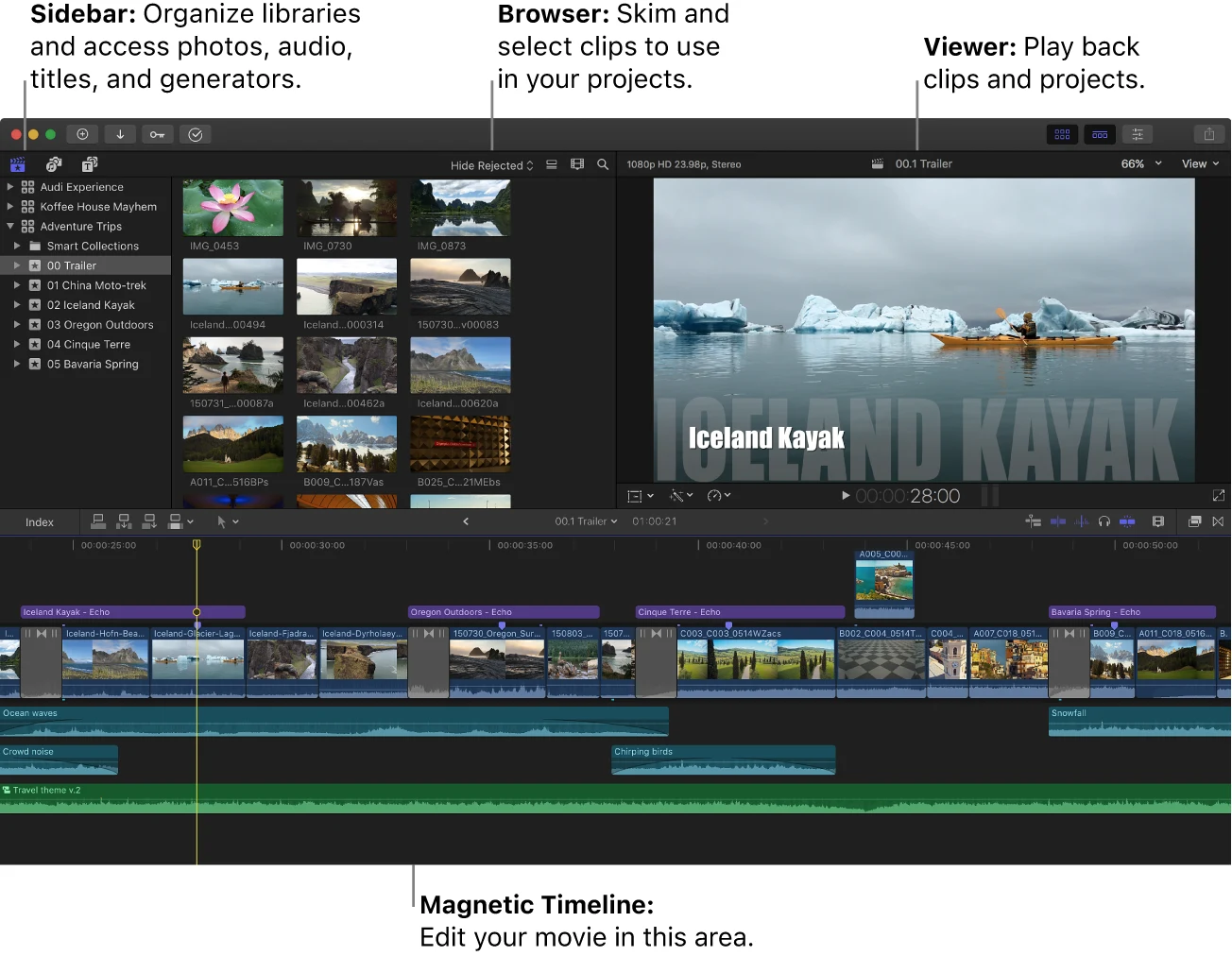
Final Cut Pro is Apple’s professional Mac editor, built around the Magnetic Timeline rather than a traditional fixed-track layout. Clips stay connected as you rearrange a project, making structural edits feel more fluid once the workflow clicks.
The current version adds Transcript Search, Visual Search, Beat Detection, AI-assisted captions, Magnetic Mask, multicamera editing, and deep optimization for Apple silicon.
For Mac users who want professional timeline depth without an Adobe subscription, Final Cut remains an obvious shortlist candidate.
Price: $299.99 one-time, or access through Apple Creator Studio at $12.99/month or $129/year.
Considerations: For desktop editing, Final Cut Pro is Mac-only. That is either a dealbreaker or completely irrelevant, depending on which laptop is currently in front of you.
Pinnacle Studio: Known for one-time-purchase editing on Windows
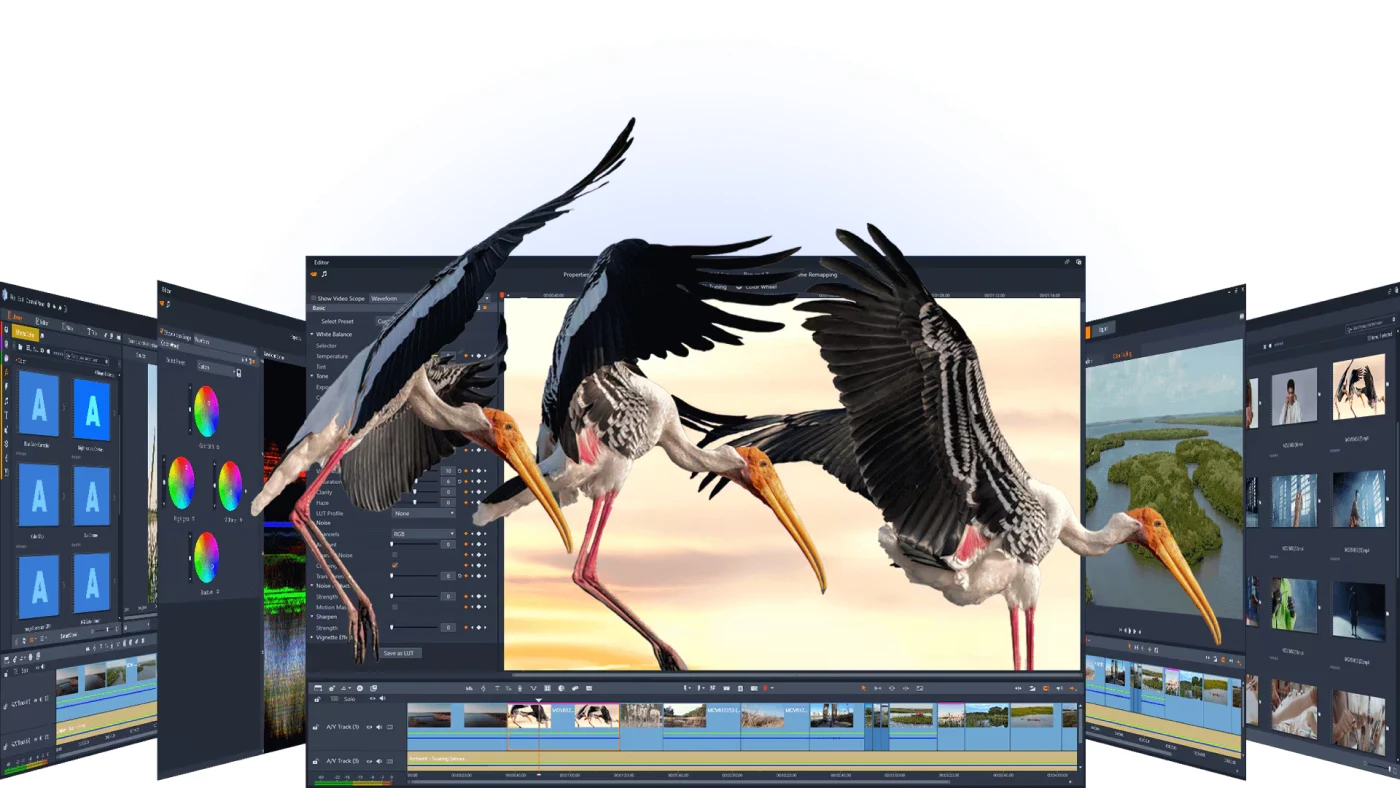
Pinnacle Studio fills a narrower but useful gap: traditional desktop editing for Windows users who would rather buy software than add another subscription.
The Standard edition covers timeline editing, screen recording, simplified color and audio tools, and two-camera multicam. Pinnacle Studio Ultimate adds 4K output, unlimited tracks, six-camera multicam, full color grading, motion tracking, masking, and additional effects.
Price: One-time purchase. Pricing varies by edition, region, and current promotion.
Considerations: Pinnacle is Windows-only, and its ecosystem is smaller than Adobe’s or Blackmagic’s. It makes the most sense when a one-time license matters in the buying decision.
Best free video editing software
Free no longer means “good enough until you learn the real thing.” Some free editors can take you surprisingly far.
The catch is knowing what “free” actually means. Sometimes it means a complete open-source editor. Sometimes it means 1080p, not 4K. Sometimes the interesting button works beautifully right up until Export.
For an even deeper comparison, see our guide to the best free video editing software with no watermark.
DaVinci Resolve: Best free option for editors who want room to grow
DaVinci Resolve gets a second mention because few free editors leave this much room to grow. The same free download covers editing, color, visual effects, motion graphics, and Fairlight audio across Windows, Mac, and Linux. The trade-off is a steeper learning curve than with a beginner editor.
CapCut: Known for free social and short-form editing
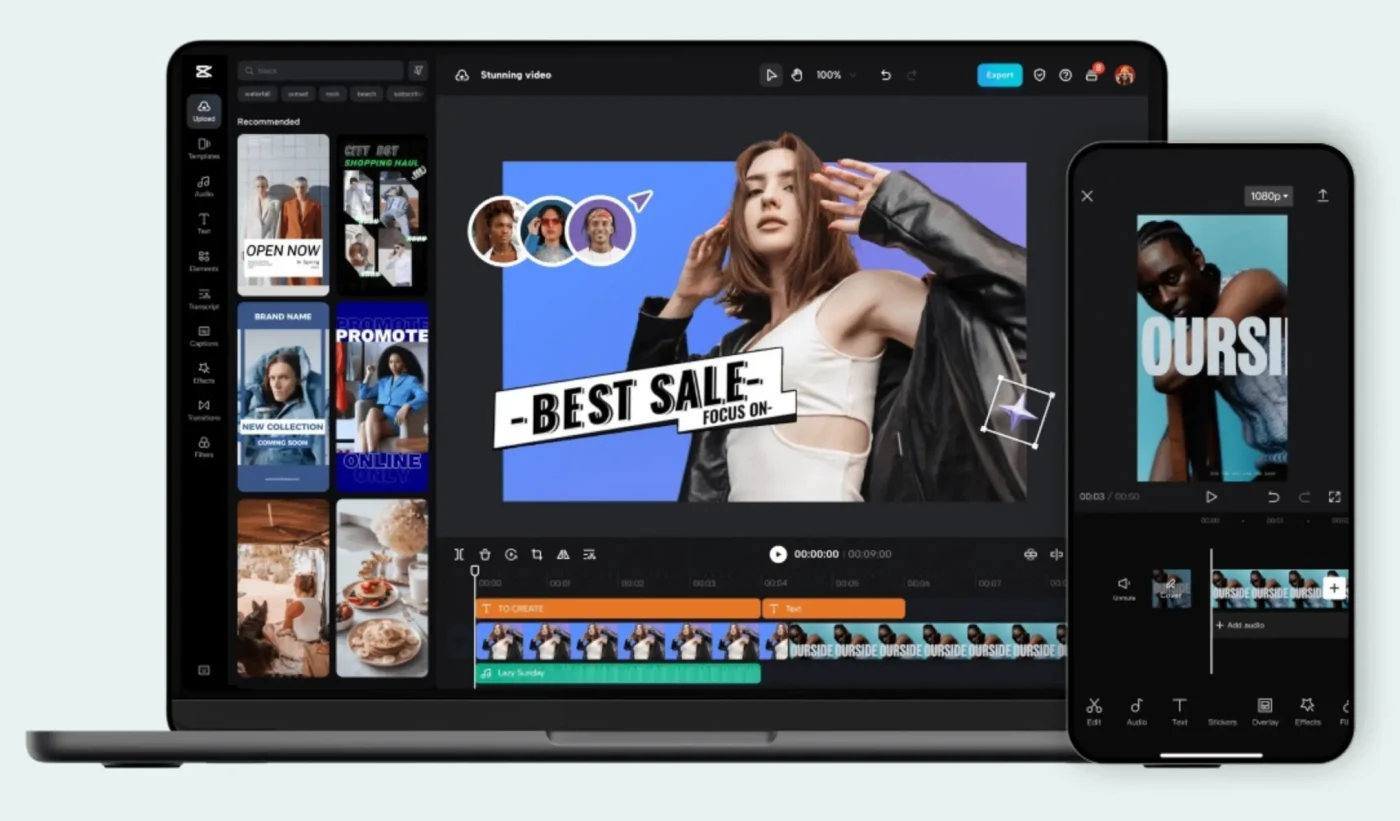
CapCut makes sense when you want to edit short-form video for TikTok, Instagram Reels, or YouTube Shorts. Its desktop and web editors include a familiar timeline, along with captions, reframing, effects, templates, and other social-first tools. These features cover many basics of making social media videos.
Price: CapCut offers free editing alongside Standard and Pro subscriptions. Paid pricing varies by region, device, platform, and current promotion.
Considerations: CapCut is easy to start with, especially if you already know the mobile app. Teams should still check which features sit behind the current paid tier before standardizing a workflow around them.
Microsoft Clipchamp: Known for straightforward Windows editing
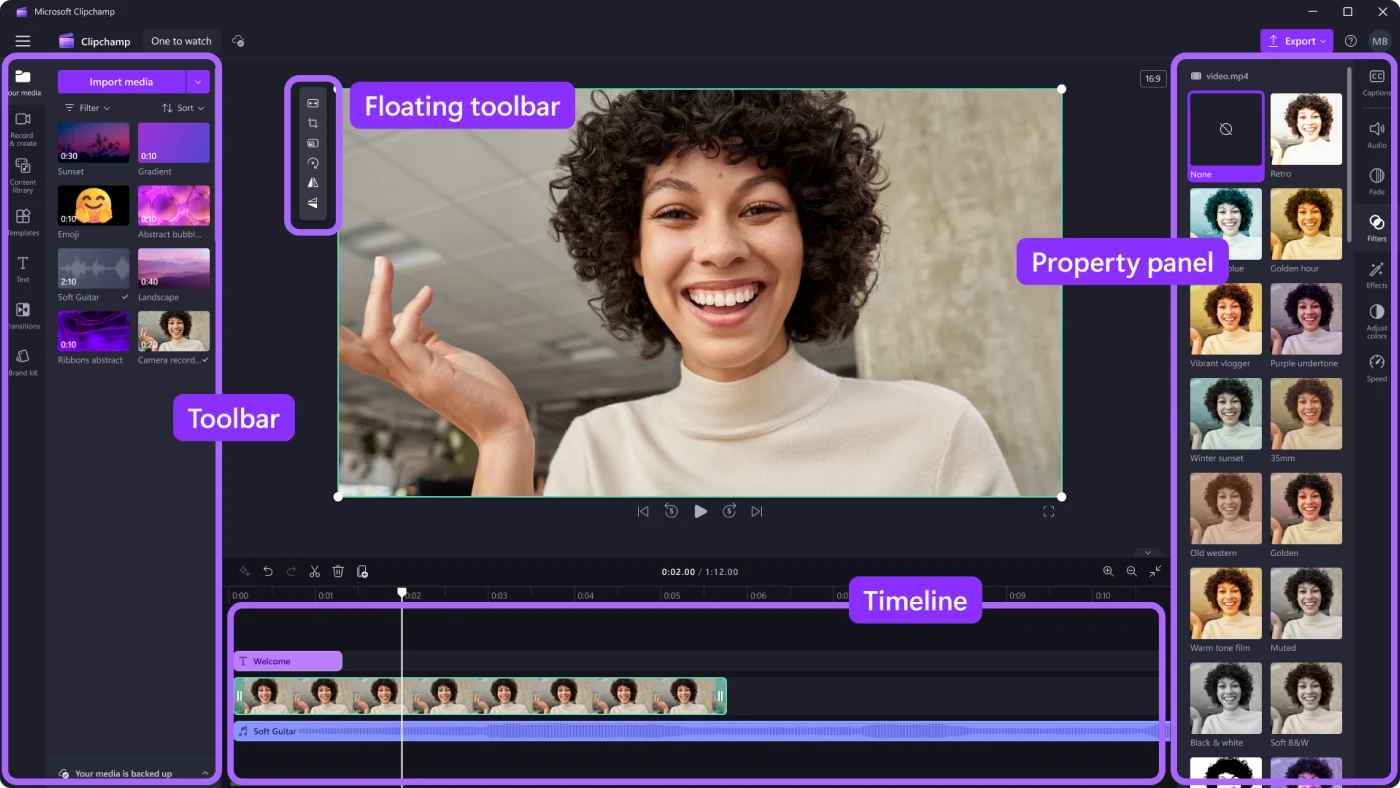
Clipchamp is Microsoft’s official Windows video editor and is built into Windows 11. You can also use the personal version in Chrome or Edge across Windows, macOS, Linux, and Chromebook.
Price: The free personal tier covers the core timeline tools, templates, stock media, recording, and exports up to 1080p. Microsoft 365 Personal and Family subscribers get additional premium features, including 4K export, brand tools, and premium stock.
Considerations: Clipchamp is a good fit for straightforward projects, especially on Windows. Editors who quickly move into advanced color, detailed audio, or more complex timelines may outgrow it.
iMovie: Known for free beginner editing on Mac
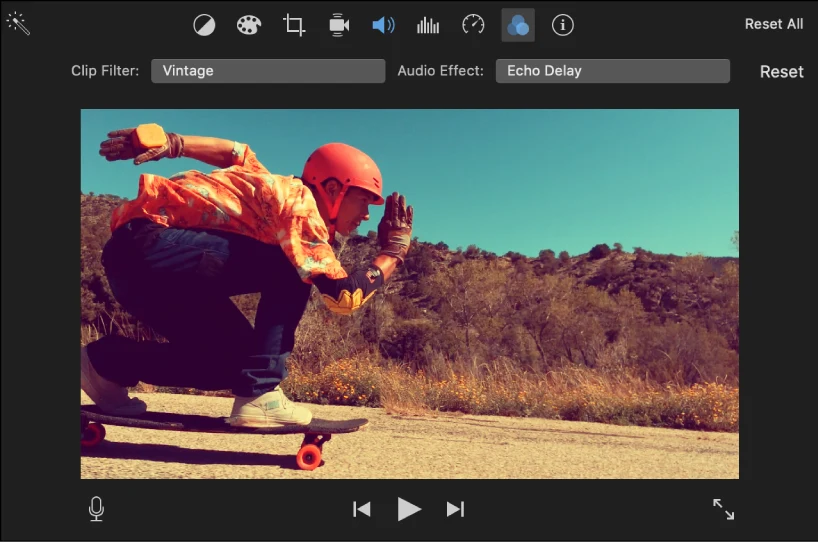
If you own a Mac and have never edited video, iMovie remains one of the easiest places to begin. It supports editing and exporting up to 4K. Its tools include titles, transitions, stabilization, split-screen, and green screen effects. You can also move projects to Final Cut Pro when you need more advanced tools.
Price: Free.
Considerations: iMovie intentionally keeps the toolset manageable. That is useful when you are learning, but it also means experienced editors can hit its ceiling fairly quickly.
Shotcut: Known for free, open-source cross-platform editing
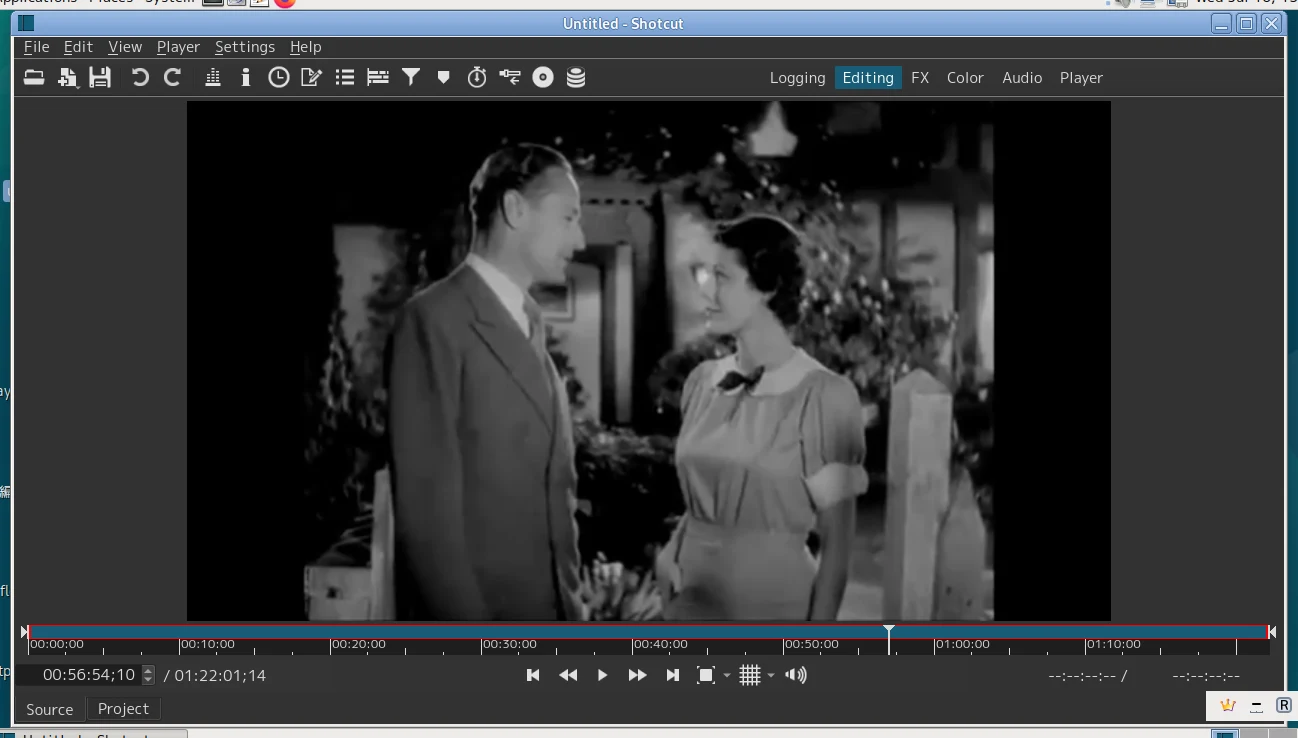
Shotcut is the option here for someone who wants genuinely free desktop editing without committing to a single operating system ecosystem.
It runs on Windows, macOS, and Linux and supports multitrack timeline editing, 4K and 8K workflows, subtitles, keyframes, proxies, broad codec support through FFmpeg, screen capture, and hardware acceleration.
Price: No subscription and no premium edition waiting behind the next menu.
Considerations: Shotcut gives you a lot for $0, but the experience is less guided than iMovie or Clipchamp. It is a better fit for people willing to learn a traditional timeline.
Best video editing software for beginners
Beginner-friendly should mean you can finish a video before you understand every button.
These editors reduce how much you need to learn upfront, but they leave very different amounts of room to grow. Filmora and PowerDirector move toward enthusiast editing. Movavi stays simpler. And the free tools above, especially iMovie and Clipchamp, remain excellent starting points if your operating system already makes the decision for you.
Wondershare Filmora: Known for approachable editing with room to grow
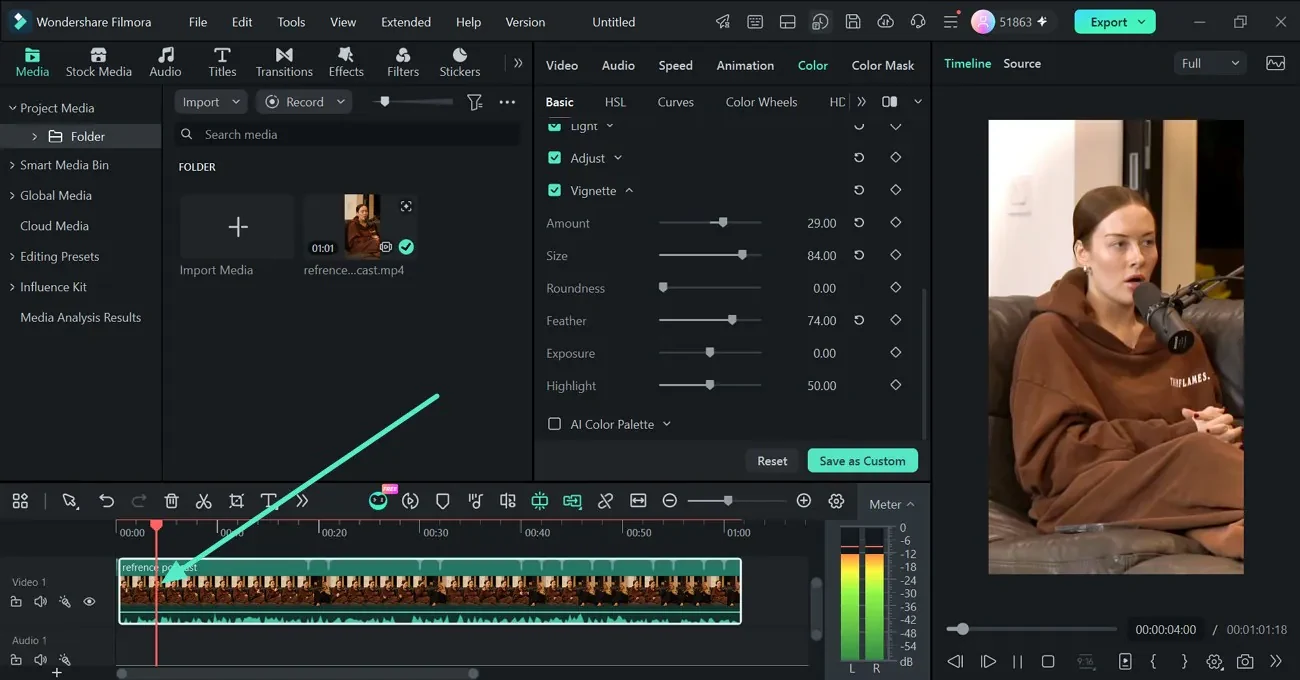
Filmora sits between stripped-down beginner editors and heavier professional software. The interface is traditional enough to teach timeline editing, while templates, effects, automated tools, and AI features reduce setup work.
Filmora 15 supports Windows and macOS, plus companion mobile platforms.
Price: Basic costs $49.99/year, while the perpetual license costs $79.99. Prices and promotions can change.
The downloadable free version lets you learn the editor, but exported videos carry a watermark until you purchase a license.
Considerations: Filmora is easier to learn than Adobe Premiere or Resolve, but its growing collection of AI tools, assets, credits, and add-ons makes it worth comparing plans before you buy.
CyberLink PowerDirector: Known for beginner-to-enthusiast editing
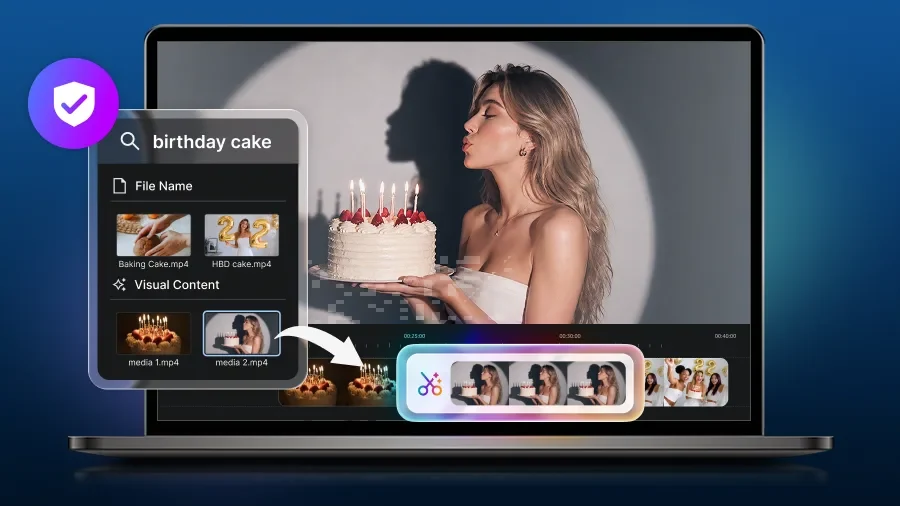
PowerDirector suits editors who want a conventional timeline without jumping directly into professional software.
PowerDirector 365 includes templates, effects, stock assets, speech-to-text, background removal, and generative tools. Its Text-Based Editing tool removes selected dialogue and detected pauses from an individual clip. You then add the trimmed clip to the timeline.
Descript keeps text-based editing central throughout the project. PowerDirector uses its transcript tool as one step within a timeline workflow.
PowerDirector is available on Windows and Mac, although subscriptions are platform-specific.
Price: PowerDirector 365 is listed at $79.99/year. PowerDirector 2026 costs $139.99 as a one-time purchase.
Considerations: Text-Based Editing requires credits and is currently limited to the subscription version. Compare each edition’s features before choosing one.
Movavi Video Editor: Known for simple desktop editing
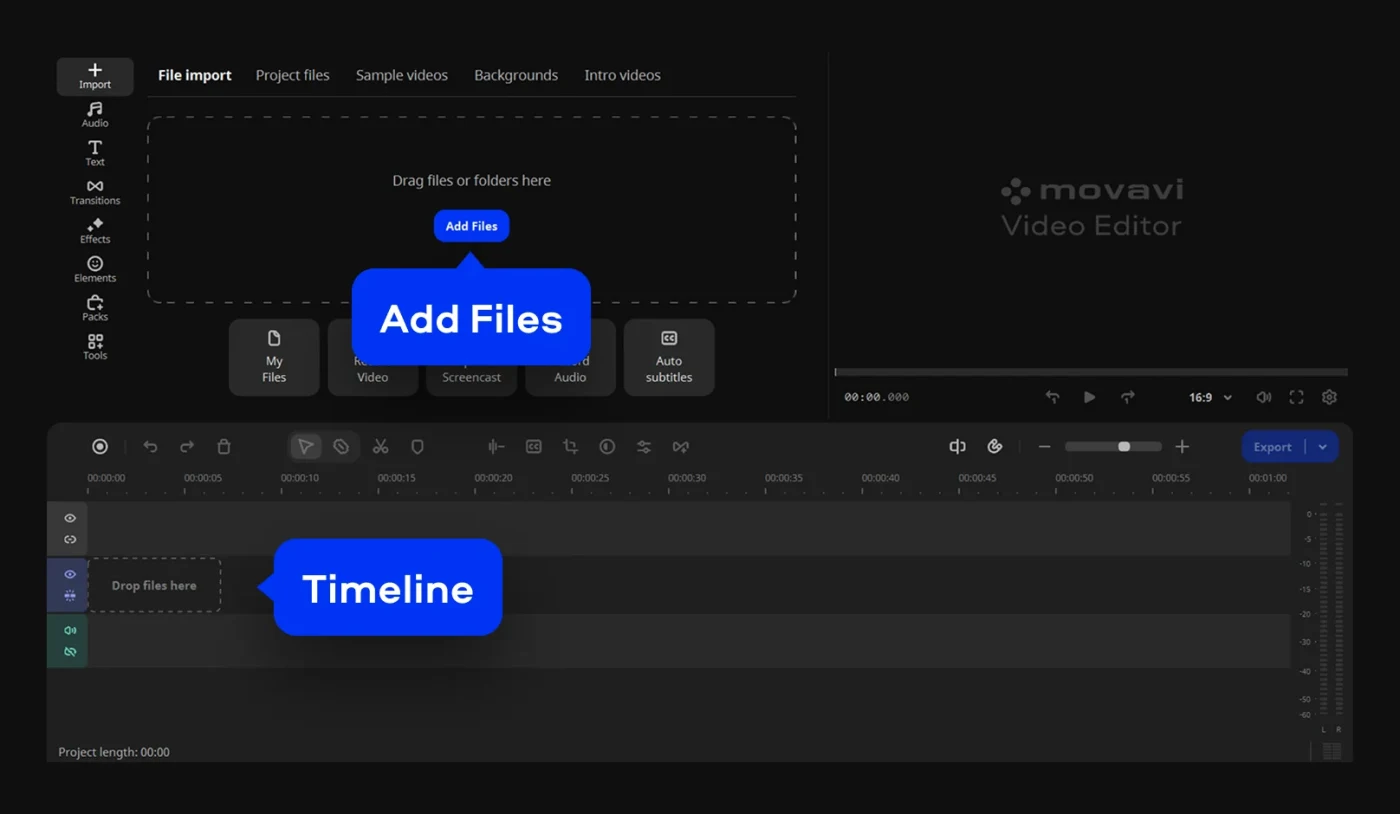
Movavi Video Editor is designed for people who want a desktop timeline without spending much time learning video-editing terminology.
Its current 2026 release includes cutting and trimming, 4K support, automatic subtitles, noise reduction, background removal, motion tracking, silence removal, effects, and screen recording. It is available for Windows and Mac.
Price: Movavi offers subscription and one-time purchase options, with prices often discounted through promotions.
Considerations: Movavi prioritizes accessibility over deep post-production. That is useful for tutorials, social videos, family projects, and straightforward YouTube work, but advanced editors will find more room in Adobe Premiere, DaVinci Resolve, or Final Cut Pro.
What about iMovie and Clipchamp for beginners?
Both absolutely belong in the beginner tier.
Choose iMovie if you already use a Mac and want a free editor that teaches the basics without much setup. Choose Clipchamp if you are on Windows and want an equally low-friction starting point with free 1080p export.
Neither asks you to commit much money, or much of your weekend, before making your first video.
Still deciding which editing approach fits your workflow? The next section breaks the choice down by operating system, budget, learning curve, and the kinds of videos you make.
How to choose video editing software
If you have narrowed the list to two or three options, these four filters can help you make the final call.
1. Start with your operating system
A surprising number of comparisons end here.
Final Cut Pro and iMovie are Mac-only. Pinnacle Studio is Windows-only. Adobe Premiere, DaVinci Resolve, Descript, Filmora, PowerDirector, Movavi, Shotcut, and CapCut offer a broader range of desktop options.
If you’re looking for the best video editing software for Windows or PC, start with Clipchamp for simplicity, Filmora or PowerDirector for a middle ground, and Adobe Premiere or DaVinci Resolve for advanced work.
2. Decide how you want to pay
The three main models are:
- Free: DaVinci Resolve, Shotcut, iMovie, Clipchamp, CapCut, and Descript all offer meaningful ways to start without paying
- Subscription: Adobe Premiere, Descript, Filmora, PowerDirector, and CapCut have recurring paid options
- One-time purchase: Final Cut Pro, DaVinci Resolve Studio, Pinnacle Studio, and versions of Filmora and PowerDirector let you buy a license outright
A cheaper editor is not automatically cheaper if you outgrow it in three months. On the other hand, buying professional software just in case you might someday color-grade a documentary is a very expensive form of optimism.
3. Decide how much timeline editing you want to learn
Traditional editors put clips, tracks, audio, effects, and transitions on a timeline. They give you increasing control as you learn the interface.
If spoken content drives most of your edits, a transcription-based editor like Descript can reduce how much timeline work you need. If precise visual timing, compositing, or color work matters more, a traditional timeline editor may be the better fit.
4. Match the editor to the videos you actually make
For long-form YouTube and commercial work, Adobe Premiere, DaVinci Resolve, and Final Cut offer the most traditional production depth.
For podcasts, interviews, and educational content, Descript’s text-based editing workflow can be faster to learn.
For short-form social video, CapCut is an obvious contender. If you plan to repurpose one video into several clips, pay close attention to captions, aspect-ratio changes, clip selection, and how easy it is to move between long and short formats.
If AI features are a major part of the decision, our separate guide to the best AI video editors goes deeper on automation, reframing, captions, clips, and generative tools.
See the difference Descript’s video editing software can make
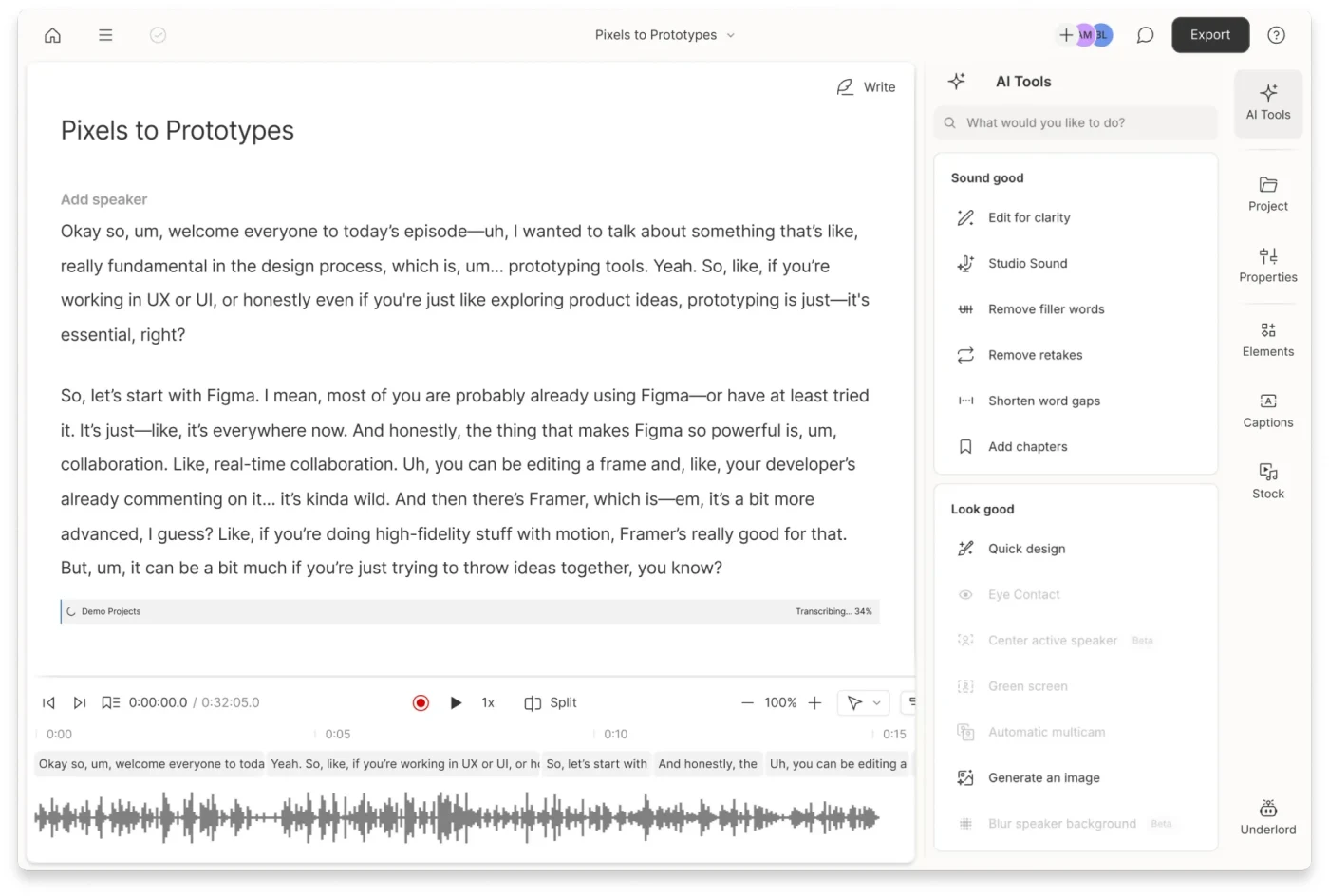
Once your main edit is in place, Descript’s all-in-one video editor can help you polish and repurpose the project. You can:
- Ask Underlord, Descript’s AI video co-editor, to handle repetitive edits or make changes from plain-language instructions
- Remove every “um” and “uh” without hunting through the timeline
- Use Eye Contact to correct your gaze when reading from notes or a script
- Clean up noisy dialogue before you start cleaning up background noise by hand
- Automatically add captions for accessibility and social viewing
- Use multicam support when a recording includes multiple camera angles
- Find clips when you want to turn a longer recording into shorter social content
You can compare the current plans on the Descript pricing page.
Frequently asked questions
What is the best video editing software by user type?
For beginners, start with iMovie, Clipchamp, Filmora, or Descript. Premiere, DaVinci Resolve, and Final Cut work well for advanced timeline workflows, while Descript is especially useful when spoken content drives the edit.
Which video editing software is best overall?
No single editor is best overall because your operating system, budget, and learning curve can rule out an otherwise excellent tool. DaVinci Resolve stands out for free, professional-grade depth; Premiere for professional subscription workflows; Final Cut for Mac; and Descript for text-based editing.
Is DaVinci Resolve really free?
Yes. DaVinci Resolve has a genuine free version for Windows, macOS, and Linux that includes editing, color correction, visual effects, motion graphics, and audio post-production. DaVinci Resolve Studio costs $295 and adds the Neural Engine, additional effects, HDR tools, and other advanced capabilities.
What do most YouTubers use to edit videos?
No single editor is used by most YouTubers. Adobe Premiere, Final Cut, and DaVinci Resolve are common choices for timeline-heavy channels, while Descript works well for talking-head, interview, and podcast-style YouTube videos. CapCut is especially useful for Shorts. For a deeper comparison, see our guide to video editing software for YouTube.